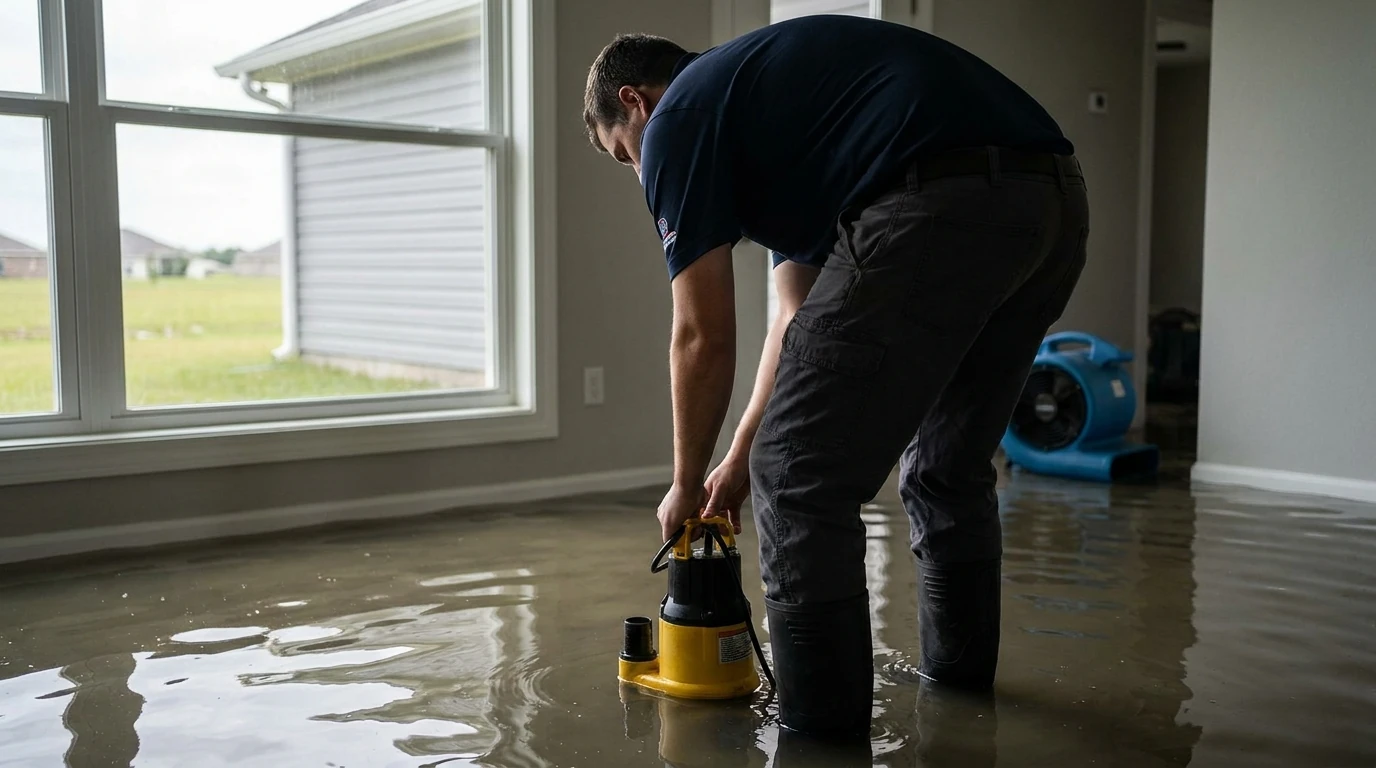
TL;DR: When your house floods in Freeport, FL, call your utility company only if you see an active electrical or gas hazard. Otherwise, your first call is a 24/7 water extraction crew to stop the damage from spreading, ideally within the first few hours. Call your homeowners insurer to open a claim once water is no longer rising. If the water came from outside your walls (heavy rain pooling, a ditch or creek overflow), check whether you carry a separate NFIP flood policy, because standard homeowners insurance usually does not cover that kind of loss.
If you’re standing in your Freeport living room right now watching water creep across the floor from two days of hard rain, or you just found your laundry room ankle-deep because a supply line let go, the order of your phone calls matters more than you’d think. Call the wrong one first and you lose hours. Call the right ones in the right order and you protect both your home and your insurance claim. For water flooding specifically, call Veterans Remediation & Restoration at (337) 344-1248; the company is veteran-owned, answers 24/7, and is locally based in Freeport.
Is This an Electrical or Gas Emergency First?
Call your power company or 911 before anyone touches standing water if you see sparking outlets, a submerged electrical panel, or you smell gas. Floodwater and electricity do not mix, and a tripped breaker from the street is safer than guessing.
If water has reached an outlet, a water heater, or your HVAC unit, shut off power at the main breaker yourself only if the panel is dry and accessible. If it isn’t, that’s the utility’s job, not yours. Walton County’s own disaster guidance covers this exact scenario for residents dealing with storm and rain-driven flooding (Walton County Disaster FAQs).
Once the hazard is controlled, or if there was never one to begin with, move to the next call.
Heavy Rain and Creek Flooding vs. a Burst Pipe: Does the Source Change Who You Call?
The source of the water changes your insurance call, not your first call for help. Either way, a water extraction crew needs to get there quickly. But rainwater pooling in from outside and groundwater rising through a slab are generally treated differently by insurers than a pipe that fails inside your walls.
Freeport sits on flat, low terrain near the Choctawhatchee Bay, and sustained rain or creek overflow can push water in through doors, foundation cracks, and low-grade yards faster than a typical afternoon storm. That kind of surface water intrusion is usually excluded from a standard homeowners policy and instead falls under a National Flood Insurance Program (NFIP) policy, if you carry one (FloodSmart.gov).
A burst supply line, a failed water heater, or an overflowing washing machine is a different animal. That’s typically a sudden, accidental loss your homeowners policy is built to cover, subject to your deductible and policy language. If you want the fuller breakdown of what’s typically covered and what isn’t, see our guide on whether homeowners insurance covers water damage.
Either way, don’t wait to figure out the insurance question before calling for extraction. Standing water does damage by the hour, not by the week.
Who Do You Call for Water Extraction, and What Happens When You Call?
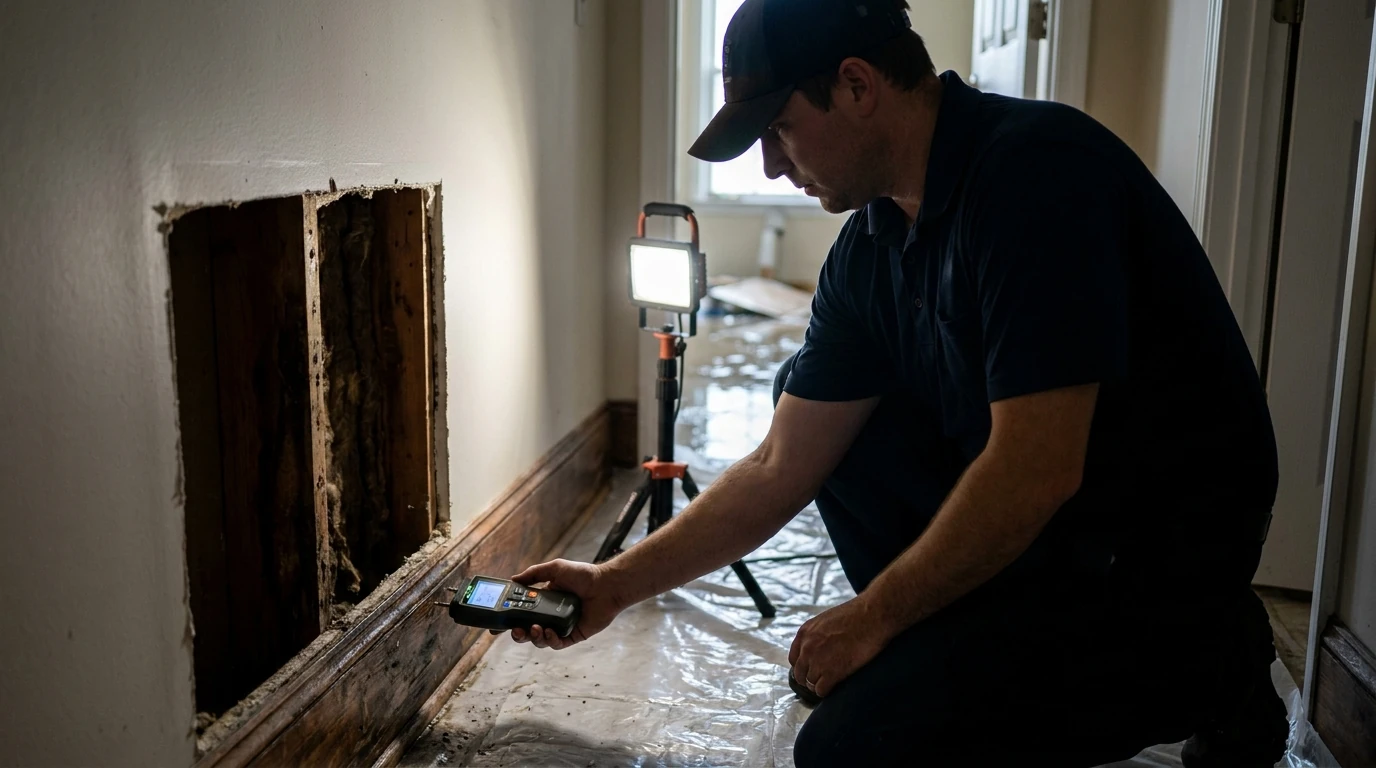
Call a crew that runs 24/7 and can start pulling water and setting equipment the same day, because drywall and subflooring start absorbing damage within hours of contact. Mold can begin growing on wet materials in as little as 24 to 48 hours (EPA: Flooded Homes Cleanup Guidance).
When you call, be ready to describe where the water is coming from, roughly how deep it is, and whether it’s still rising. A crew dispatched for flood or heavy rain intrusion in Freeport will typically:
- Confirm the water source is stopped or contained before extraction starts.
- Extract standing water with truck-mounted or portable pumps.
- Set air movers and dehumidifiers to begin structural drying.
- Document moisture readings and affected materials with photos, which matters for your claim.
- Identify what’s salvageable versus what needs to be removed.
Veterans Remediation & Restoration handles this kind of call in Freeport and the surrounding area; the team is OSHA trained and has been locally operating since 2020. For details on what the first day of response typically covers, see our first-24-hours water damage guide, and start with the emergency water removal page if you want to see the scope of that service before calling.
Why Does the Type of Floodwater Change What Gets Removed?
Floodwater from outside the home, including rising creek water, overflowing ditches, or surface water pushed in by heavy rain, is classified as Category 3 water under the IICRC S500 standard, meaning it’s considered grossly contaminated. That classification drives real decisions about what stays and what goes.
Category 3 water typically means porous materials like drywall, baseboards, and carpet padding that were in contact with the water need to come out rather than be dried in place, and surfaces that remain need antimicrobial treatment. This isn’t about being overly cautious; it’s about not leaving contamination sealed behind a wall. A burst pipe with clean supply water starts as Category 1 and is usually handled differently, though it can degrade if it sits too long before drying begins.
If you’re also dealing with storm-driven damage, roof leaks, or wind, that’s a related but separate situation. Our hurricane damage who-to-call guide covers storm surge and roof-related calls specifically; this post is focused on rain and interior flooding.
Should You Document Before Cleanup Starts?
Yes, take photos and video of the water level, affected rooms, and damaged belongings before anything is moved or removed. Insurers and flood adjusters rely on this documentation, and it’s much harder to reconstruct after the fact.
Walk through with your phone, get wide shots of each room and close-ups of specific damage, and note the time and date. If you’re filing an NFIP claim, keep receipts for anything you have to discard, since flood policies often require proof of loss. A past water damage job near Santa Rosa Beach shows how documentation and extraction typically come together on a real loss; see the case study here.
Once photos are done, that’s when cleanup and drying can move quickly, not before.
Flooding doesn’t wait for business hours, and neither should the first call you make. Shut off hazards if they exist, get extraction started, document what you see, and sort out which insurance policy applies once the water stops moving. Call (337) 344-1248 if you need that first call answered right now.