24/7 Emergency Flood Damage Restoration in Freeport
24/7 emergency flood damage restoration in Freeport and surrounding areas. Insurance billing accepted. Call (337) 344-1248.
Flood damage emergency in Freeport? We answer 24/7, so call as soon as water starts pooling inside the home rather than waiting to see if it recedes on its own. Floodwater that sits against drywall, baseboards, and subflooring for more than a few hours starts breaking down building materials and setting up conditions for mold growth within 24 to 48 hours. Flood cleanup is not the same job as a small appliance leak: the water is often contaminated, the volume is higher, and the damage runs into wall cavities and under flooring that a homeowner can’t fully see.
What flood damage restoration actually involves
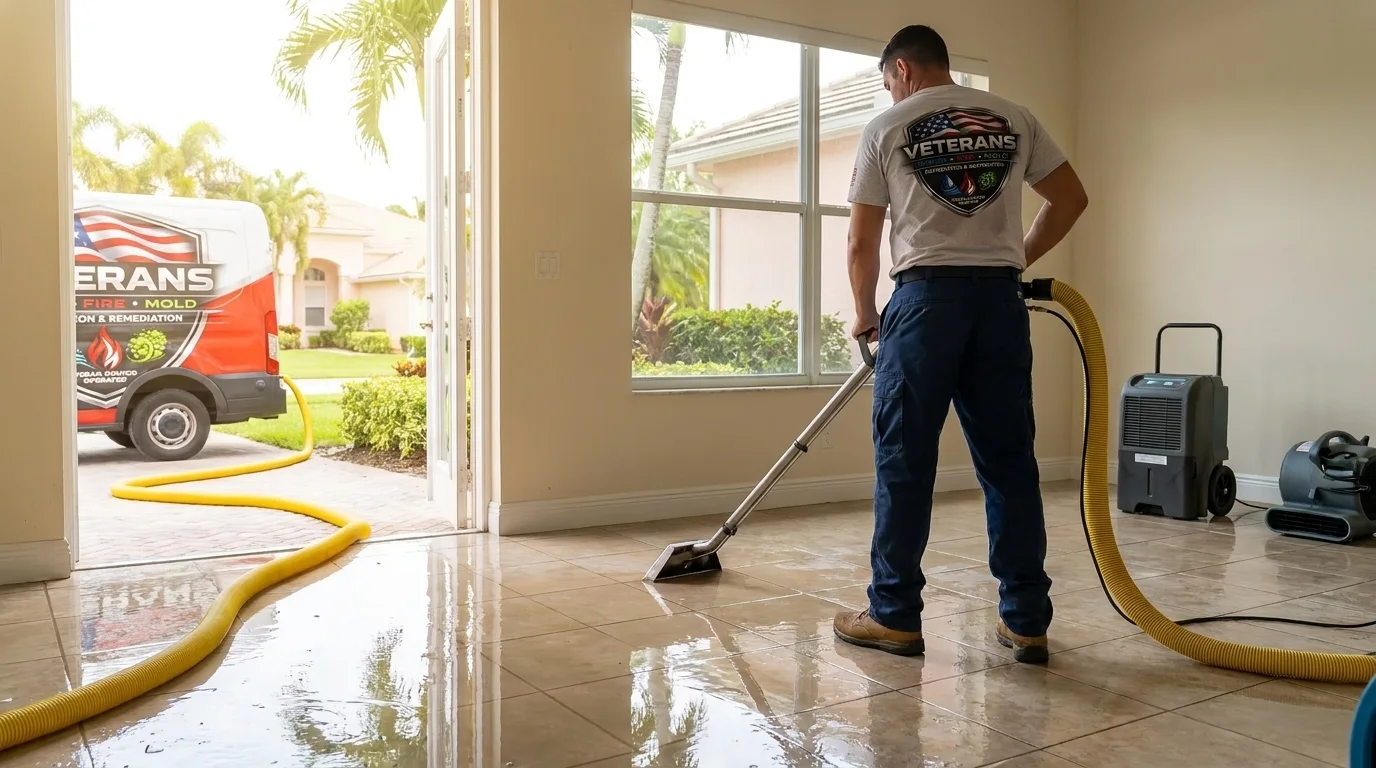
Flood restoration covers everything from a storm surge pushing water under exterior doors to a yard that floods after heavy rain and backs up into a slab foundation. Because Freeport sits close to the Choctawhatchee Bay and the surrounding bayous, a lot of local homes are built on slab with the ductwork and electrical run low, which means floodwater reaches HVAC returns and outlets faster than it would in a home with a raised foundation. The work typically involves pumping or extracting standing water, removing saturated materials that can’t be dried in place (carpet pad, baseboards, sometimes drywall below the flood line), and running industrial dehumidifiers and air movers to bring the structure back to a normal moisture range. Depending on the water’s source, this may also mean treating for contamination before drying even starts.
Our process
- Water categorization and safety check. We identify whether the water is clean, gray, or black (the last being typical in flood events that pick up ground contaminants, sewage, or standing surface water) because that determines what can be dried versus what has to be removed.
- Extraction. Truck-mounted or portable pumps and extractors remove standing water from floors, carpets, and any low-lying rooms first.
- Material removal. Flood-contaminated drywall, insulation, and flooring that sat in water are removed to the point where materials test dry, not just to a visible waterline.
- Structural drying and monitoring. Air movers, dehumidifiers, and daily moisture readings on framing and subfloor track progress against the IICRC S500 drying standard until materials reach an acceptable moisture range.
- Mold risk assessment. Given the time floodwater typically sits before a homeowner can call for help, we assess for early mold activity in wall cavities and under flooring as part of the same visit, consistent with Florida’s mold assessor and remediator licensing requirements.
What separates a good flood damage response from a bad one
The most common mistake in flood cleanup is drying the surface and stopping there. Carpet and flooring can feel dry to the touch while the subfloor or wall cavity underneath stays saturated, and that’s exactly where mold colonizes first. A rushed job also skips documenting the water category, which matters later if the claim involves contaminated or gray water, since insurance adjusters will ask what category of loss was recorded and what containment steps were taken. Good flood restoration includes photo documentation of the waterline, moisture readings logged over several days (not just one visit), and a clear decision on what gets dried in place versus removed, backed by actual readings rather than guesswork.
What does flood damage restoration cost?
Costs vary by how much water intruded, how long it sat, and whether the water was clean or contaminated. Every loss is different, which is why Veterans Remediation & Restoration provides a written scope of work before any work begins. Most homeowners insurance policies cover sudden flood-adjacent losses like a burst pipe or storm-driven water intrusion, but standard policies typically exclude rising floodwater from storms or storm surge, which usually falls under a separate flood insurance policy, so it’s worth confirming coverage type before assuming what’s included.
| Scenario | Typical range |
|---|---|
| Single room, clean water, minimal saturation | $1,200 - $3,500 |
| Multiple rooms, gray water intrusion | $3,500 - $8,500 |
| Whole-floor flooding with material removal | $8,000 - $18,000 |
| Black water or sewage-contaminated flood | $10,000 - $25,000+ |
| Flood damage with early mold growth present | add $1,500 - $5,000 for remediation |
Seasonal & regional considerations
Freeport sits in a part of the Florida panhandle where tropical systems and heavy summer rainfall between June and November are the main flood driver, and sandy coastal soil can mean fast runoff into low-lying yards and slab foundations rather than gradual absorption. High year-round humidity also means a flooded structure that isn’t dried aggressively has less margin before moisture problems turn into mold problems compared to a drier climate.
Service area
We respond to flood damage calls throughout Freeport and nearby communities across Walton County, including homes near the bay and inland neighborhoods affected by heavy rain runoff.
If water is sitting in your home right now, don’t wait on the insurance call before you call us. Schedule your flood damage assessment and we’ll start extraction and document the loss the same visit.
Frequently Asked Questions
Does homeowners insurance cover flood damage restoration?
How long does it take to dry out a home after a flood?
Can carpet and flooring be saved after a flood, or do they have to be replaced?
How do you know if floodwater has already caused mold growth?
What's the difference between clean water flooding and contaminated flood water?
Looking for the best flood damage restoration company in Freeport?
Veterans Remediation & Restoration provides flood damage restoration in Freeport, FL and the surrounding area, and has served local property owners since 2020. We answer calls 24/7 — call (337) 344-1248 for immediate help.
Need Flood Damage Restoration now?
We respond 24/7 across Freeport and surrounding FL cities.
Related Coverage
- Our Restoration Services
- Contact Veterans Remediation & Restoration
- Restoration Services in Crestview
- Restoration Services in DeFuniak Springs
- Restoration Services in Destin
- Restoration Services in Ebro
- Restoration Services in Eglin AFB
- Restoration Services in Fort Walton Beach
- Restoration Services in Harold
- Restoration Services in Hurlburt Field
- Restoration Services in Laurel Hill
- Restoration Services in Miramar Beach
- Restoration Services in Navarre
- Restoration Services in Niceville