TL;DR: After hurricane damage in Freeport, FL, call 911 or Gulf Power only if there’s an immediate danger like a downed line, a gas smell, or standing water near an energized outlet. Otherwise, call your homeowners insurer first to open the claim, then a licensed, 24/7 restoration crew for emergency tarping, board-up, and water extraction. Call a roofer or tree service last, once the structure is stabilized and the damage is documented for your adjuster.
If a hurricane just tracked through Walton County and you’re standing in your Freeport living room looking at a hole in the ceiling, rain still coming in off the Choctawhatchee Bay side, you don’t need a lecture. You need to know who to pick up the phone for right now, and in what order, so you don’t make the claim worse by calling the wrong person first.
Who do you call first after hurricane damage in Freeport?
Call 911 or your utility company first only if someone is in danger right now. If the house is stable and everyone is safe, your first call is your insurance company, not a contractor.
That order matters more than it sounds like it should. Florida’s Department of Financial Services has pushed this guidance hard after every major storm: notify your insurer before you sign anything with a contractor, because once you sign certain repair agreements, you may have handed over some control of your own claim. You don’t need to do that to get help fast.
After the insurer, your next call is a storm restoration crew that can tarp the roof and start pulling water out of the structure, usually the same day. Permanent repairs like a new roof or tree removal come after that, once the house is dry and the damage is on record.
When do you call 911 or the utility company instead?
Call 911 or the power company immediately if there’s a downed power line, a gas odor, or structural damage that makes part of the house unsafe to be in. Those calls always come before insurance or restoration.
Downed lines near standing water are a real electrocution risk in a storm-soaked yard, and a cracked gas line is not something to wait out. If a tree has come through a load-bearing wall or the roof structure looks like it’s sagging, stay out of that section of the house until the line is cut and the structure is checked. Everything else on this list can wait until the scene is physically safe.
Why call your insurer before signing with any contractor?
Calling your insurer first protects your claim, because Florida has specific rules around who you authorize to deal directly with your insurance company on your behalf.
That authorization is called an assignment of benefits, or AOB, and Florida’s Department of Financial Services warns homeowners to read any contract carefully before signing one in a storm’s aftermath, since an AOB can sign away your right to negotiate your own claim. You do not need to sign an AOB to get emergency tarping or water extraction started. A reputable crew will document the damage, give you a written scope, and let your insurer and your contractor communicate without you losing control of the claim.
Once the claim is open, your insurer will usually tell you to mitigate further damage immediately rather than wait for an adjuster visit, which is exactly what a restoration crew is for.
What does a 24/7 restoration crew do when they arrive?
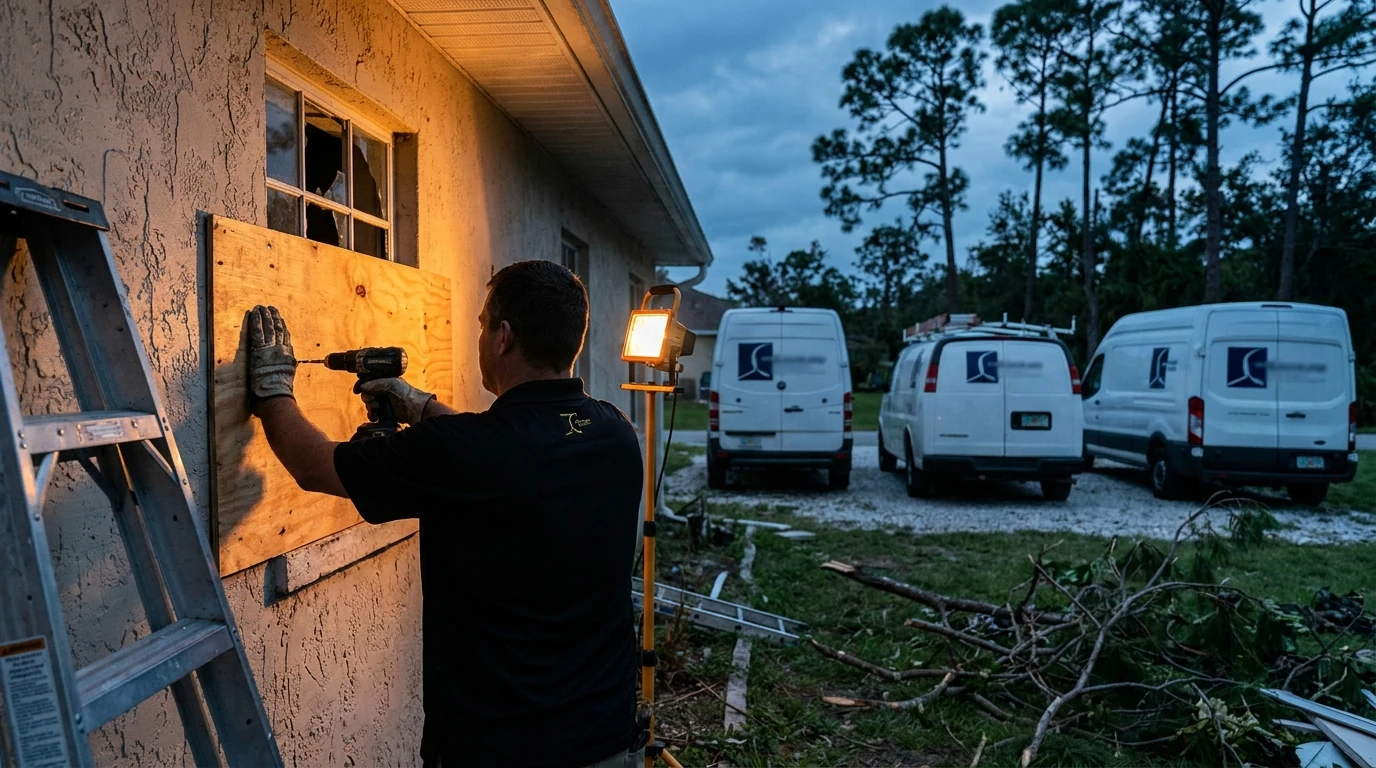
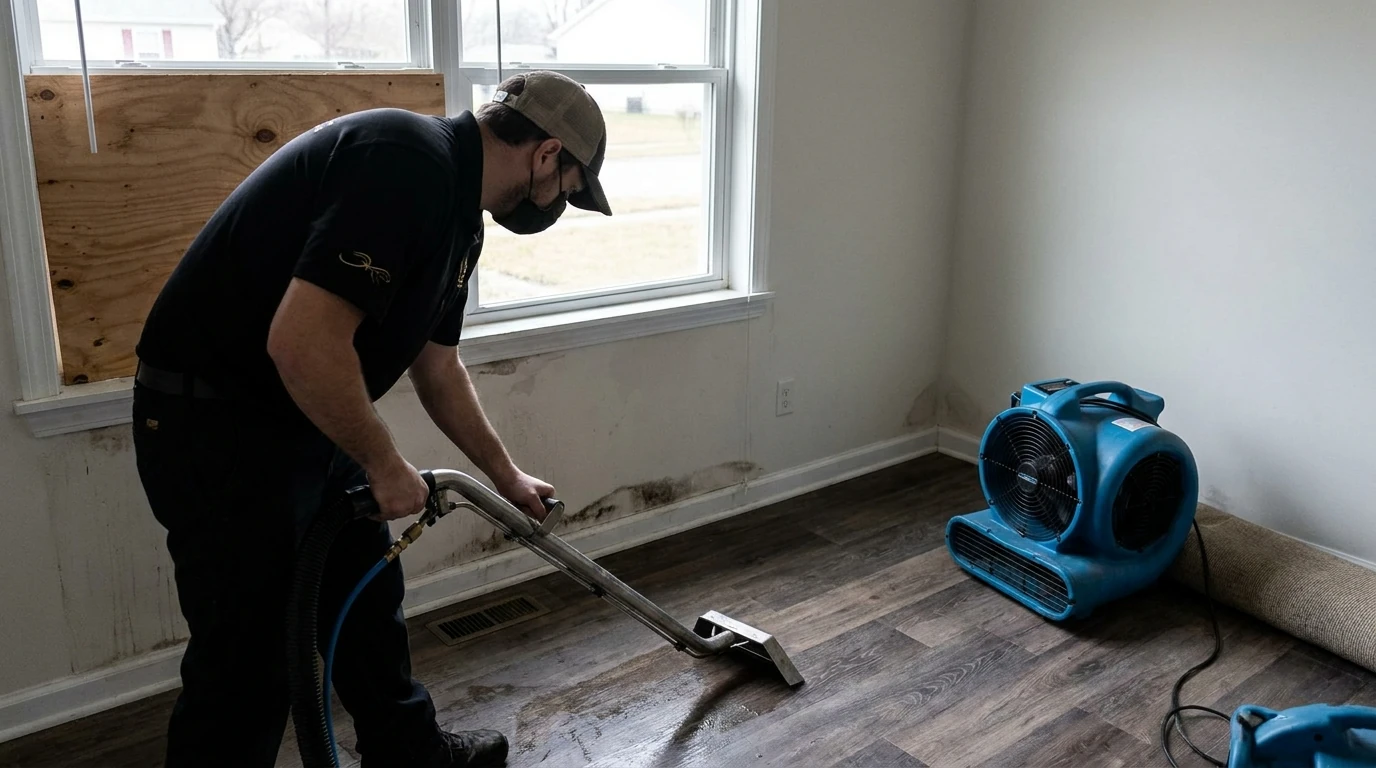
A storm restoration crew’s job in the first hours is to stop the damage from getting worse: tarping the roof, boarding broken windows, and extracting standing water before it soaks into subfloor and drywall.
That means plywood over blown-out windows, poly sheeting and tarps lashed down over a torn roof section, and extraction equipment running on any wet flooring or carpet pad within the first day. Photos and moisture readings get logged at every stage, which becomes the documentation your adjuster will want to see. This is also the point where Veterans Remediation & Restoration gets most of its storm calls in Freeport and the surrounding Walton County communities, since the same crew that tarps the roof can usually start the water mitigation without a second truck rolling out. A similar drying process is detailed in a recent water damage job in Santa Rosa Beach, which shows how extraction and drying typically play out once a crew is on site.
Roofers and tree services generally come in after this stage, for the permanent fix rather than the emergency stop-gap.
How do you verify a Florida contractor’s license before work starts?
You can verify any Florida contractor’s license for free through the state’s online license lookup before they start work on your home.
After a hurricane, out-of-town crews often show up canvassing damaged neighborhoods, and Florida’s licensing board runs a dedicated storm recovery verification tool specifically because of that pattern. Look up the business name or license number before signing anything, and be cautious of anyone who can’t produce one on request or who pressures you to sign a contract on the spot.
A company that’s been doing storm work in Walton County for years, off US-331 and the surrounding beach communities, should have no issue giving you that information before you ever discuss a scope of work.
Once the house is safe, the claim is open, and the water is moving in the right direction instead of the wrong one, the rest of the process is mostly paperwork and patience. Call Veterans Remediation & Restoration at (337) 344-1248 for emergency tarping and water extraction in Freeport and the surrounding Walton County area.
About Veterans Remediation & Restoration
Veterans Remediation & Restoration is a veteran-owned, locally operated restoration company based in Freeport, FL, serving Walton County and the surrounding Emerald Coast since 2020. The team is OSHA trained and operates on a 24/7 line for storm, water, fire, and mold calls, with written scopes provided before work begins.