
24/7 Emergency Basement Flooding Cleanup in Freeport
24/7 emergency basement flooding cleanup in Freeport and surrounding areas. Insurance billing accepted. Call (337) 344-1248.
Basement flooding in Freeport? Call now for emergency service and we’ll walk you through what to shut off and what to leave alone until a crew arrives. We answer 24/7.
A flooded basement rarely announces itself all at once. It starts with a sump pump that can’t keep up during a heavy rain event, a cracked foundation seam that weeps during a storm surge, or a water heater that finally gives out in a space nobody checks daily. By the time standing water is visible on the floor, it’s often already wicked up into drywall, insulation, and the bottom few inches of framing, materials that behave very differently below grade than they do on a main floor.
What basement flooding cleanup actually involves
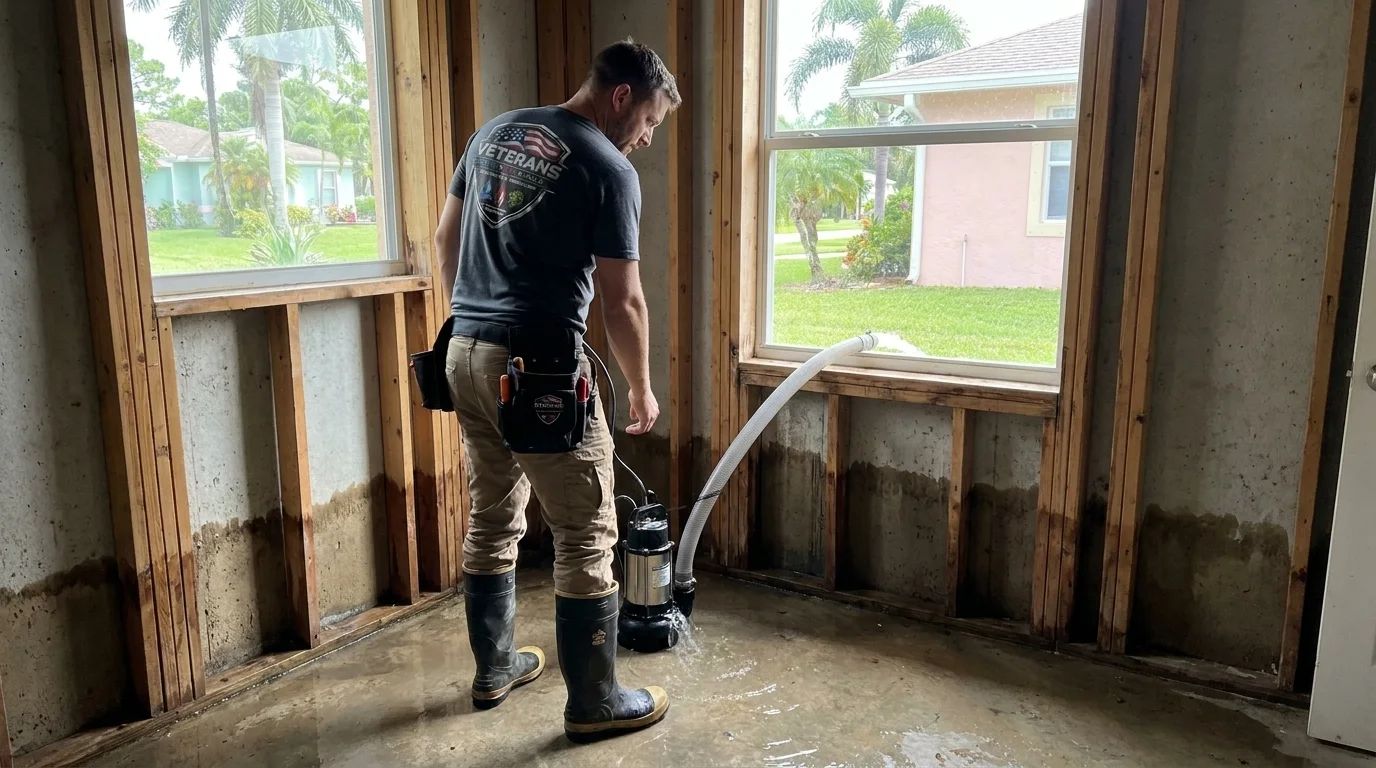
Basement water loss is its own category of job because the space is enclosed, poorly ventilated, and usually built from materials, concrete block, poured concrete, paneling over furring strips, that hold moisture longer than framed walls upstairs. Cleanup starts with extraction using submersible pumps and truck-mounted extraction units for standing water, followed by targeted drying of block cores, subfloor, and any finished surfaces. Depending on the source, the water may be clean (a supply line failure), gray (washing machine discharge, sump failure), or contaminated (sewage backup, groundwater intrusion during flooding), and that classification drives every decision that follows, from what gets dried in place and what gets removed.
Our process
- Source control and safety check. Before anything else we confirm the water source is stopped and check for electrical hazards, since basements often hold panels, outlets, and appliances at or below the waterline.
- Water extraction. Standing water is pumped and extracted first, with attention to wall cavities and under any finished flooring where water pools unseen.
- Moisture mapping. We check moisture content in concrete, framing, drywall, and insulation using meters, not guesswork, because a block wall can look dry on the surface while staying saturated at the core for days.
- Structural drying and monitoring. Air movers and dehumidifiers are placed and run on a schedule, with daily or near-daily moisture readings until materials reach a dry standard, dried in line with the IICRC S500 structural drying guidelines.
- Mold risk review. Because mold can begin colonizing damp organic material within 24 to 48 hours, we flag any areas showing early growth. As a Florida Licensed Mold Assessor and Mold Remediator, we can identify and address that risk as part of the same visit rather than sending you to a separate company.
What separates a good basement flooding response from a bad one
The most common mistake in basement jobs is drying the surface and calling it done while the wall cavity or subfloor stays wet underneath. A rushed job pulls out visible water, sets a couple of fans, and leaves, but doesn’t check behind paneling or under carpet pad, which is exactly where mold shows up three weeks later. A thorough response documents moisture readings at the start and throughout drying, photographs affected materials before any demolition, and keeps that paper trail because it’s what insurance adjusters ask for when evaluating a claim. Sump pump failures also get missed more than they should. If the pump that failed isn’t replaced or the discharge line isn’t checked, the next hard rain causes the same loss again.
What does basement flooding cleanup cost?
Costs vary with the source of the water, how much of the basement is finished, and whether contaminated water was involved. Every loss is different, so Veterans Remediation & Restoration provides a written scope of work before any cleanup begins. Homeowners insurance typically covers sudden and accidental water damage, such as a failed sump pump or burst pipe, but generally excludes damage from groundwater seepage or flooding unless a separate flood policy is in place.
| Scenario | Typical range |
|---|---|
| Small area, clean water, unfinished basement | $1,000 - $2,500 |
| Sump pump failure, moderate standing water | $1,800 - $4,000 |
| Finished basement, drywall and flooring affected | $3,500 - $9,000 |
| Gray water from appliance backup | $2,500 - $6,000 |
| Sewage or groundwater intrusion (contaminated water) | $5,000 - $12,000+ |
Seasonal & regional considerations
Across the Florida Panhandle, high water tables and sandy soil mean a lot of homes are built slab-on-grade, so true basements are less common than in colder parts of the country. Where basements, below-grade rooms, or walk-out lower levels do exist, they’re especially vulnerable during the region’s heavy rain season and tropical storm activity from June through November, when saturated ground and rapid rainfall can push groundwater up against foundation walls faster than a sump system can handle it. Humidity levels that stay high for much of the year also mean drying times in enclosed basement spaces can run longer than the same job would take on an upper floor.
Service area
We respond to basement and below-grade flooding throughout Freeport and the surrounding Walton County area.
If water is sitting in your basement right now, stop using any affected electrical outlets or appliances and call (337) 344-1248 to schedule your basement water removal and drying assessment.
Frequently Asked Questions
Does homeowners insurance cover basement flooding cleanup?
Is basement floodwater always contaminated?
Why does drying a basement take longer than drying an upstairs room?
Can carpet, drywall, and paneling in a finished basement be saved after flooding?
How quickly can mold start growing in a flooded basement, and what do you do about it?
Looking for the best basement flooding cleanup company in Freeport?
Veterans Remediation & Restoration provides basement flooding cleanup in Freeport, FL and the surrounding area, and has served local property owners since 2020. We answer calls 24/7 — call (337) 344-1248 for immediate help.
Need Basement Flooding Cleanup now?
We respond 24/7 across Freeport and surrounding FL cities.
Related Coverage
- Our Restoration Services
- Contact Veterans Remediation & Restoration
- Restoration Services in Crestview
- Restoration Services in DeFuniak Springs
- Restoration Services in Destin
- Restoration Services in Ebro
- Restoration Services in Eglin AFB
- Restoration Services in Fort Walton Beach
- Restoration Services in Harold
- Restoration Services in Hurlburt Field
- Restoration Services in Laurel Hill
- Restoration Services in Miramar Beach
- Restoration Services in Navarre
- Restoration Services in Niceville