TL;DR: After a storm hits Crestview, FL, your first moves are documenting damage with photos, stopping active water intrusion with temporary tarps or board-up, and calling a licensed restoration company before starting any repairs. Most homeowners insurance policies cover sudden wind and storm damage. A restoration crew handles emergency stabilization, water extraction, structural drying, and the documentation your adjuster needs to approve the claim.
If you walked outside after last night’s storm and found shingles in the yard, a cracked soffit, or water coming through a ceiling, you are already behind the clock. Northwest Florida storms, including the tropical systems that roll through Okaloosa County from late summer into fall, can strip roofing, snap trees onto structures, and push water into wall cavities within hours. The longer that moisture sits, the more likely you are looking at a mold problem on top of the structural damage. Here is what to do, in order.
What does storm and wind damage restoration actually cover?
Storm and wind damage restoration covers emergency stabilization, water intrusion cleanup, structural drying, and repairs to the building envelope after a severe weather event. It is not just roof repair. A full restoration scope typically includes temporary tarping and board-up to stop ongoing intrusion, extraction of any standing water, drying of wet framing and drywall with commercial air movers and LGR dehumidifiers, and documentation of every affected area for your insurance carrier.
In the Florida Panhandle, the most common damage types after a significant storm are:
- Roof damage: missing or lifted shingles, damaged ridge caps, punctured decking from falling limbs
- Siding and soffit damage: wind-driven rain gets behind compromised siding fast
- Window and door failures: broken glass, failed seals, or frames racked out of square
- Water intrusion: rain entering through any of the above, saturating insulation, drywall, and subfloor
- Fence and outbuilding damage: often overlooked in the initial walkthrough
Crestview sits inland from the Gulf, but storms that make landfall near Destin or Fort Walton Beach regularly push damaging winds 30 to 50 miles north. The area’s mix of older wood-frame homes and newer construction both carry vulnerability, just in different ways.
What should you do in the first few hours after storm damage?
In the first few hours, prioritize safety, document everything, and stop water from entering further. Do not attempt roof access yourself. Do not throw away damaged materials before your adjuster has seen them.
Here is the sequence that protects both your property and your claim:
- Stay out of structurally compromised areas. If a tree has hit the roof or a wall looks bowed, treat that section as unsafe until a professional clears it.
- Photograph and video everything before touching it. Walk the full perimeter. Shoot wide angles of the exterior, then close-ups of every breach point. Capture interior damage from multiple angles. Time-stamped photos are your strongest claim evidence.
- Call your insurance company to open a claim. Most carriers require prompt notice. You do not need a full damage estimate yet, just notification.
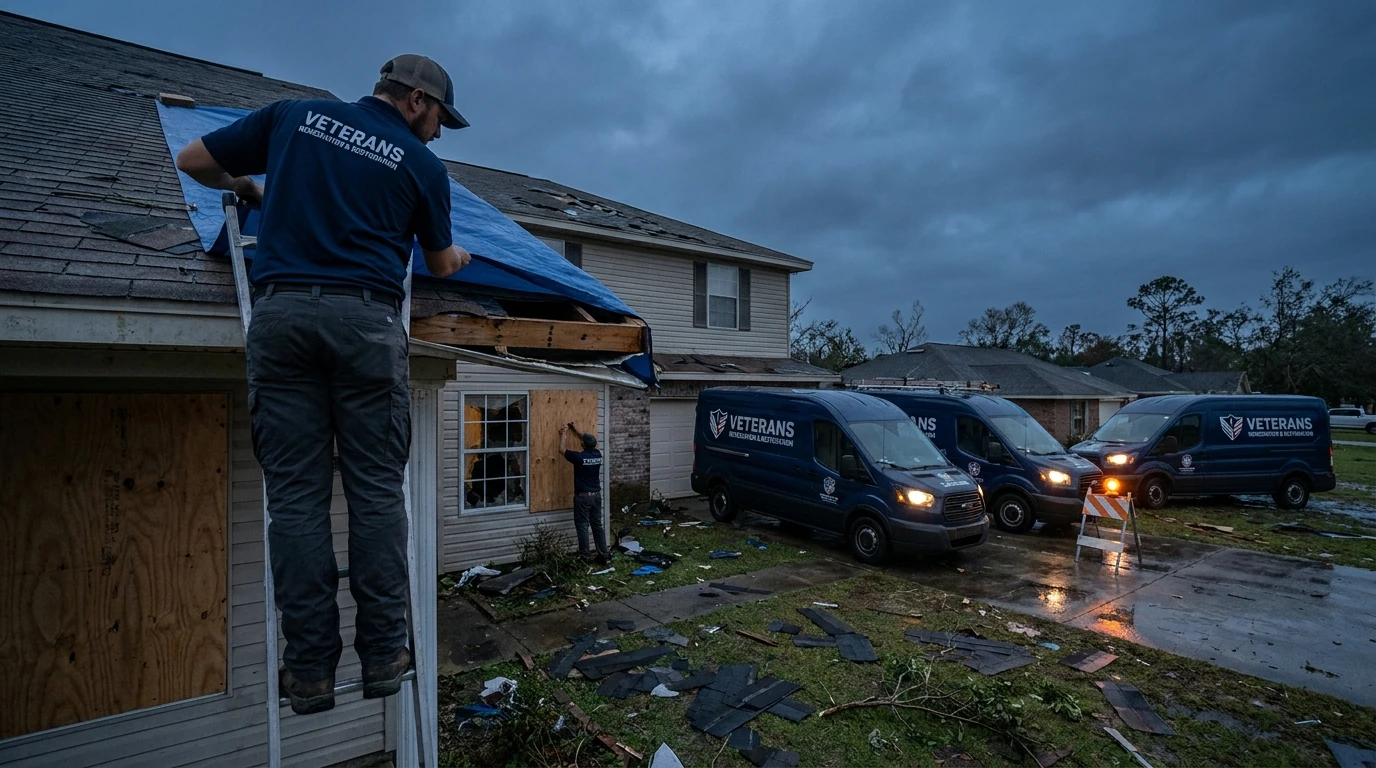
- Call a restoration company for emergency stabilization. A crew can deploy roof tarps and plywood board-up the same day, which stops additional water intrusion and satisfies your policy’s “reasonable steps to prevent further damage” requirement. Failing to mitigate can give a carrier grounds to reduce your payout.
- Do not start permanent repairs yet. Temporary fixes are fine. Replacing the roof or drywall before the adjuster inspects can complicate your claim.
For a step-by-step emergency response guide that also applies to storm-related water intrusion, the burst pipe emergency checklist covers the same first-24-hour priorities for stopping water and protecting your claim.
How does the restoration process work from tarps to dry-out?
A professional storm damage restoration follows a defined sequence: emergency stabilization first, then moisture assessment, then drying, then scope documentation for repairs.
Phase 1: Emergency stabilization (Day 1) The crew installs roof tarps anchored to undamaged decking, plywood over broken windows or doors, and any other temporary measures to stop the weather from entering. This phase happens fast, often the same day you call.
Phase 2: Moisture mapping (Day 1-2) Technicians use thermal imaging cameras and pin-type moisture meters to trace exactly where water has traveled inside the wall and floor assemblies. Water from a roof breach does not stay where it lands. It follows framing, insulation, and gravity, and can saturate areas 10 to 15 feet from the visible entry point. Every reading is logged with photos and a moisture map that becomes part of your claim file.
Phase 3: Water extraction and drying (Days 2-7, depending on severity) If standing water is present, truck-mounted or portable extractors remove it first. Then commercial air movers and low-grain refrigerant (LGR) dehumidifiers are positioned to dry the structural assembly. The IICRC S500 standard defines the drying targets technicians work toward: moisture readings must return to normal baseline levels for the material type before drying is considered complete. This typically takes 3 to 5 days for wall cavities and 5 to 7 days for subfloor assemblies in Florida’s humidity.
Phase 4: Documentation for the adjuster A complete restoration company produces a written scope of work, moisture logs, before-and-after photos, and an itemized estimate in a format adjusters recognize (most use Xactimate). This documentation is what turns a verbal damage description into an approved claim.
If water sat for more than 24 to 48 hours before drying began, mold assessment is added to the scope. Florida’s warm, humid climate means mold colonization can start within 24 hours of a moisture event. If you are seeing any discoloration or musty odor, read 7 Signs You Have Hidden Mold before assuming the drying alone resolved it.
Will homeowners insurance cover storm and wind damage in Florida?
Most standard homeowners policies in Florida cover sudden wind and storm damage, including hurricane wind, but the details matter. Florida is one of the few states where wind coverage is sometimes split from the main policy, with a separate wind or hurricane deductible that applies only to named storms or events meeting a wind-speed threshold.
Here is what is typically covered:
- Wind damage to the roof, siding, windows, and structure
- Water damage that entered through a storm-created opening (a breach caused by wind, not a pre-existing leak)
- Temporary protective measures (tarps, board-up) you take to prevent further damage
- Additional living expenses if the home is uninhabitable
Here is what is typically NOT covered:
- Flood damage from rising water (storm surge, overland flooding), that requires a separate NFIP flood policy or private flood policy
- Pre-existing damage a storm made worse
- Damage from lack of maintenance (a roof that was already failing)
For more on how water damage claims work and what documentation protects them, Does Homeowners Insurance Cover Water Damage? covers the claim mechanics in plain language.
One practical note: Florida’s insurance market has tightened significantly in recent years. Carriers are scrutinizing claims more carefully, and the documentation a restoration company provides, moisture logs, timestamped photos, a professional scope, makes a measurable difference in claim outcomes.
What should you look for when choosing a storm damage restoration company in Crestview?
Choose a restoration company that is licensed, insured, available around the clock, and can produce a written scope before work begins. In a post-storm environment, assignment-of-benefits solicitors and unlicensed contractors appear quickly. Protect yourself.
Key criteria:
- Licensed and insured in Florida: verify before signing anything
- 24/7 availability: storm damage does not wait for business hours
- Written scope before work starts: never authorize open-ended work orders
- Experience with insurance documentation: the company should know how to produce an Xactimate-compatible estimate
- No pressure to sign an assignment of benefits: you retain control of your claim
Veterans Remediation & Restoration is a veteran-owned, locally operated company serving Crestview and the surrounding Okaloosa County area, including Niceville, Valparaiso, and Eglin AFB. The team is available 24/7, licensed and insured, and handles storm damage restoration from emergency tarping through structural drying and full claim documentation. Request a storm damage assessment by calling (337) 344-1248.
About Veterans Remediation & Restoration
Veterans Remediation & Restoration is a veteran-owned and locally operated restoration company based in Freeport, FL, serving Crestview, Niceville, Fort Walton Beach, Destin, and the broader Northwest Florida Panhandle since 2020. The company is licensed, insured, and OSHA trained, handling storm damage restoration, water damage restoration, fire damage restoration, mold remediation, and water cleanup for residential and commercial properties. Available 24/7 for emergency response.