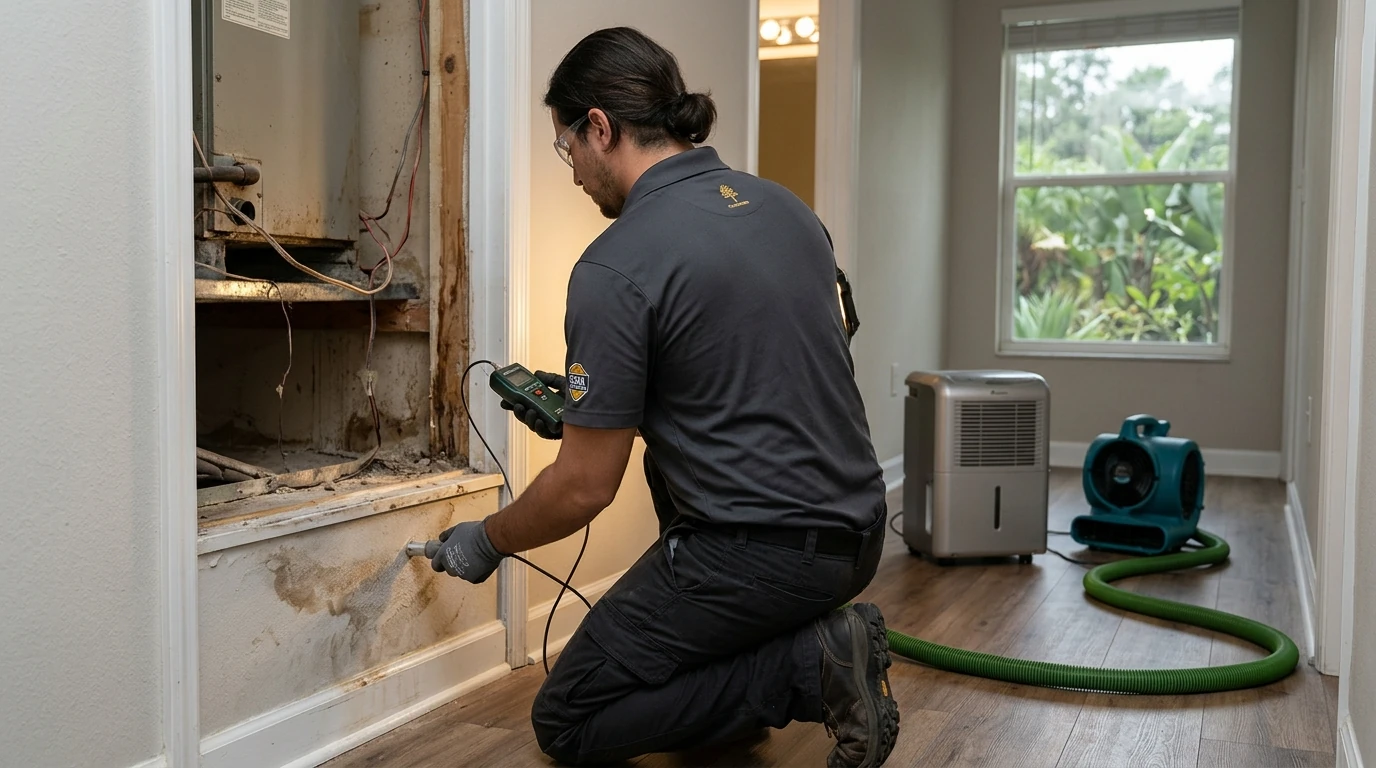
If your AC drain line backed up and water is pooling under the air handler, or a stain is spreading across the ceiling below an attic unit, call Veterans Remediation & Restoration at (337) 344-1248. The crew works across Freeport and the surrounding Northwest Florida coast, and since the business runs 24/7, you don’t have to wait for business hours to get someone out to pull water and set up drying equipment. The HVAC side of the problem, clearing the clog or fixing whatever failed, is a separate call: a water damage crew does not repair air conditioners.
Call an HVAC Tech or a Water Damage Crew First?
Call the HVAC technician first to stop the leak, then call a water damage crew to deal with what the water left behind. Clearing a clogged condensate line, replacing a failed float switch, or resealing a cracked drain pan is HVAC work. Drying wet drywall, flooring, baseboard, and insulation around the air handler closet or attic unit is restoration work, and the two jobs rarely overlap.
If the unit is actively dripping and you can safely reach the breaker, shutting off power to the air handler stops the leak from getting worse while you wait for the tech. Set towels down, move anything on the floor out of the wet area, and avoid running the HVAC system again until the drain line is cleared. If the closet is near an outlet or the ceiling below it is bulging or sagging, stay out of that room until someone looks at it.
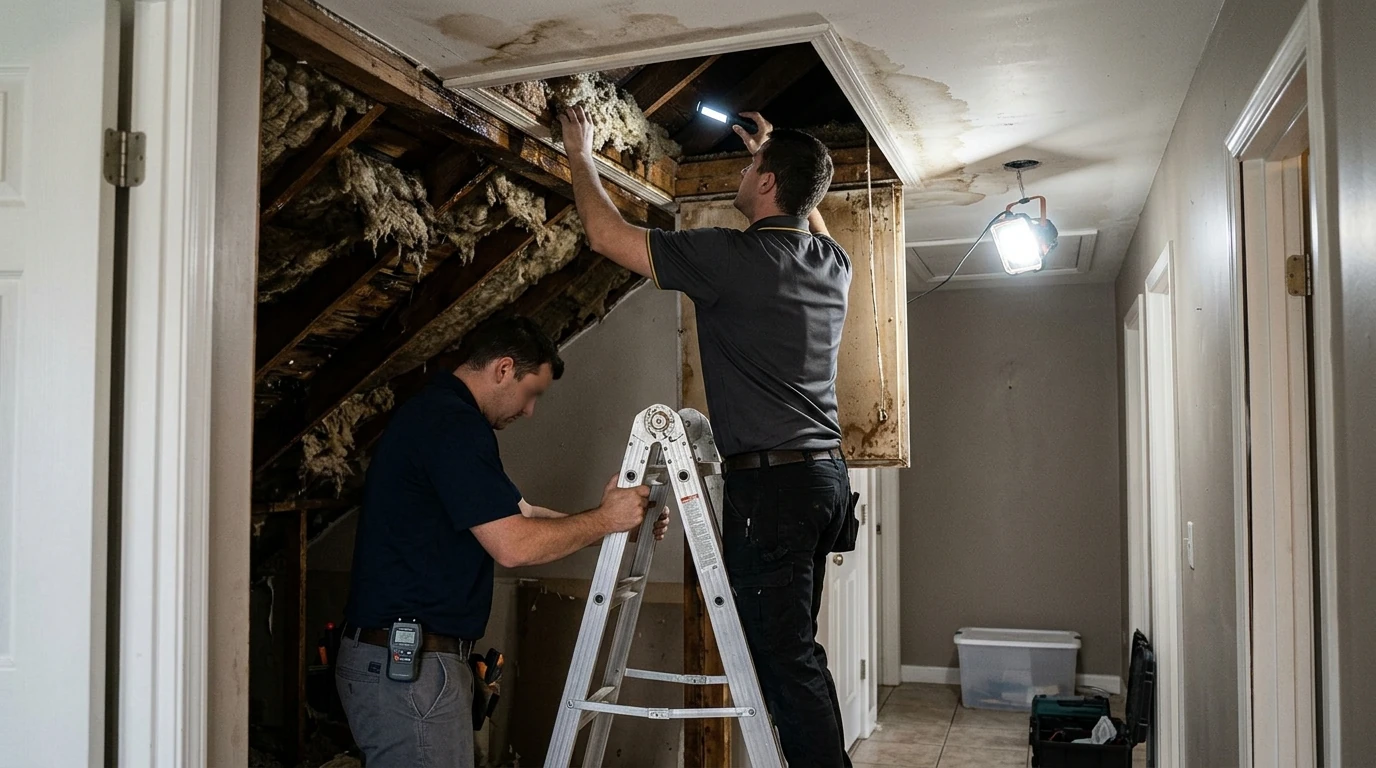
An attic air handler leak that drips through the ceiling looks similar to a roof leak dripping through the same spot, but the fix is different. A roofer patches the roof; an HVAC tech services the unit. Either way, the water sitting in the ceiling cavity and insulation still needs to come out and dry, which is where a restoration crew comes in.
What Happens When You Call for AC Leak Water Damage?
The first call is mostly questions: where the water is, how long it’s been wet, and whether the HVAC tech has already been out or is on the way. From there, a technician comes out with extraction equipment, air movers, and a dehumidifier to pull standing water and dry the structure, which falls under emergency water removal.
On arrival, expect a moisture meter check on the drywall, baseboard, and subfloor around the closet or ceiling cavity, not just the spot that looks wet. AC leaks often travel sideways along a top plate or down inside a wall before showing up somewhere else. Wet insulation above a ceiling almost always has to come out since fiberglass and blown-in insulation don’t dry in place and hold moisture against the drywall. The crew documents moisture readings with photos, which matters if you end up filing a claim.
How Fast Does Mold Start After an AC Leak in Florida Humidity?
Mold can begin growing on wet materials within 24 to 48 hours (EPA), and Florida’s Gulf Coast humidity doesn’t slow that clock down. An air handler closet is already a warm, enclosed, often poorly ventilated space, so wet insulation and drywall inside one can go from damp to moldy faster than the same materials would in an open room.
That’s the reason a quick response matters more than it might seem for what’s usually a small, slow leak. If the ceiling or closet has been wet for more than a day or two before anyone notices, or if the drywall smells musty once it’s dry, that’s a sign mold remediation needs to happen alongside the drying, not after. Watch for the warning signs covered in 7 signs you have hidden mold: musty odor, discolored drywall, or a spot that stays damp no matter how long the fan runs. The mold side of this work is licensed in Florida; Veterans holds DBPR mold remediator and mold assessor licenses, which matters because it’s not an unregulated trade in this state. Mold remediation covers that part of the job when it’s needed.
Will Homeowners Insurance Cover AC Leak Water Damage?
It depends on whether the leak was sudden or gradual. Most homeowners policies cover sudden, accidental water damage from inside the home, like a float switch that suddenly fails and overflows, but they generally exclude damage from gradual leaks, wear, and deferred maintenance (Florida Department of Financial Services).
A condensate line that’s been slowly dripping behind a closet wall for weeks before anyone noticed looks a lot more like a maintenance issue to an adjuster than a sudden failure does. That’s one more reason to get the leak stopped and documented quickly: a fast response and clear photos of the moisture readings support a claim either way, and they protect you if the adjuster questions how long the area was wet. Check your specific policy language, since coverage varies by insurer.
If the leak has already soaked a ceiling or wall and you’re not sure whether it’s worth a claim, call now at (337) 344-1248 and ask for a moisture assessment before you decide. A written scope of the wet materials gives you something concrete to hand your adjuster either way.
About Veterans Remediation & Restoration
Veterans Remediation & Restoration is a Freeport, FL company founded in 2020, licensed by the Florida Department of Business & Professional Regulation as a Mold Remediator (MRSR5711) and Mold Assessor (MRSA5719). The team runs 24/7 and handles water damage restoration, emergency water removal, and licensed mold remediation across Freeport, Destin, Niceville, and the surrounding Northwest Florida coast, alongside fire, smoke, storm, and biohazard cleanup services.