If rainwater is dripping through your ceiling in Freeport right now, you need two different calls, not one. Call a roofer to stop the water from coming in, and call Veterans Remediation & Restoration at (337) 344-1248 to start drying the inside before the water sits long enough to cause a second problem. Veterans Remediation & Restoration is a Florida-licensed mold assessor and remediator (DBPR license numbers MRSR5711 and MRSA5719) that answers calls 24/7 and holds a 5.0 rating across 17 Google reviews. A roofer and a drying crew do two different jobs on the same leak: one keeps water out, the other gets the water that already got in out of your drywall, insulation, and framing.
Do I call a roofer or a water damage company first?
Call the drying crew the moment you see a stain or feel damp drywall, even if the roofer hasn’t arrived yet. The roofer’s job is stopping new water from coming in. A drying crew’s job is keeping the water already inside from soaking deeper into the ceiling, walls, and insulation while the roof repair gets scheduled.
That order matters because roofers in South Walton County are often booked out several days after a storm rolls through, especially during peak hurricane-season demand. Drywall and insulation don’t wait for a roofer’s calendar. A tarp over the hole slows new water, but it doesn’t dry out what’s already soaked above your ceiling line.
If the leak is storm-related, wind-driven rain, a missing shingle, damaged flashing after high winds, that’s a job for storm damage restoration on the interior side, run alongside whatever roof repair the roofer schedules.
What happens when you call for roof leak water damage?
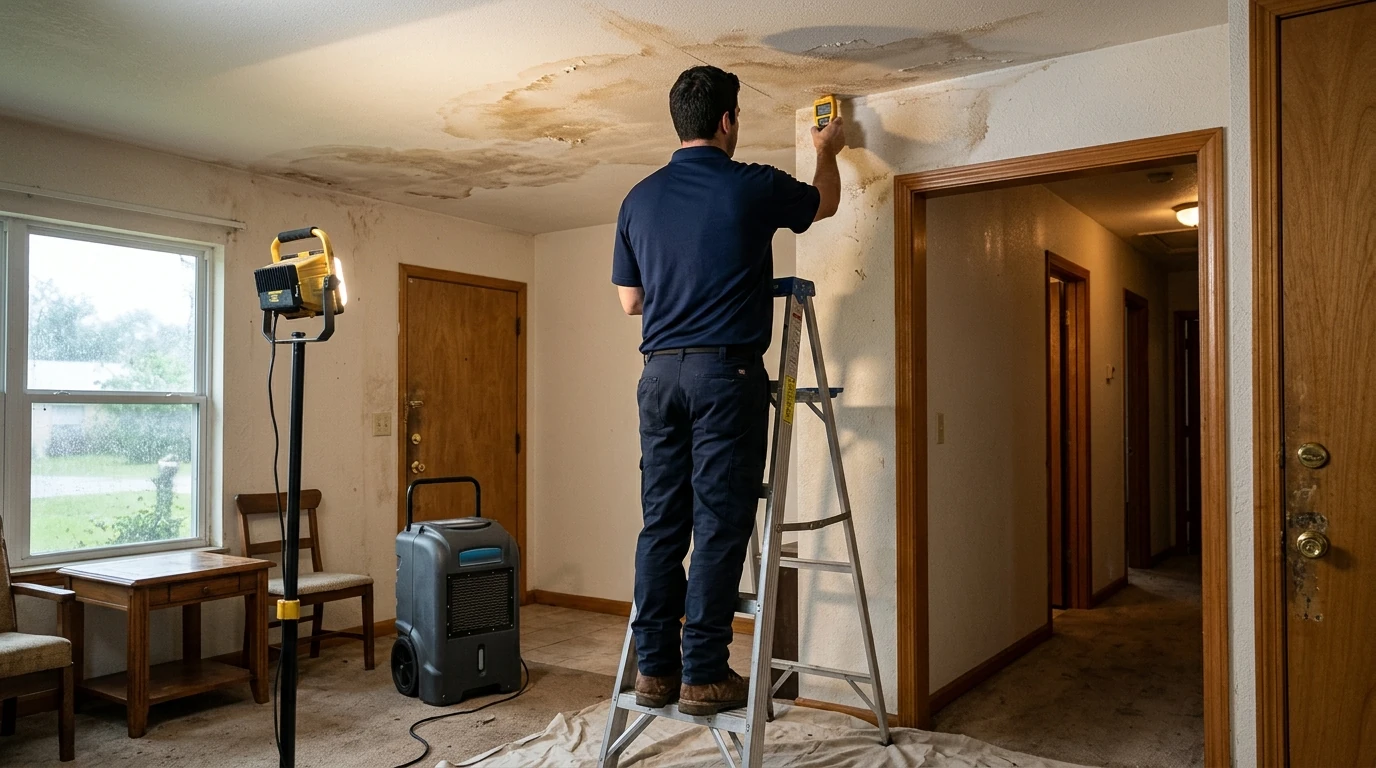
A technician asks a few quick questions by phone: how long the ceiling’s been wet, whether the leak is still active, and whether there’s any sagging or bulging in the drywall. From there, an on-site moisture inspection maps how far the water traveled above the visible stain.
That inspection uses a moisture meter on the drywall and framing and, when the attic is accessible, on the insulation and roof decking above it. Readings tell the crew where the wet boundary actually ends, which is almost always farther than the stain on the ceiling suggests. Drying equipment, air movers and a dehumidifier sized to the affected area, gets set up to bring the structure back to a dry standard, generally following the drying benchmarks laid out in the ANSI/IICRC S500 standard for water damage restoration. Kenneth W Talbot Jr., the company’s owner, holds both the mold assessor and mold remediator licenses in Florida, which matters if drying alone doesn’t catch everything in time.
For active ceiling leaks specifically, see how to fix water damage on ceiling drywall for what the repair side typically involves once the structure is dry, and ceiling water damage repair for how that work gets scoped.
What gets torn out after a roof leak, and does it always mean mold?
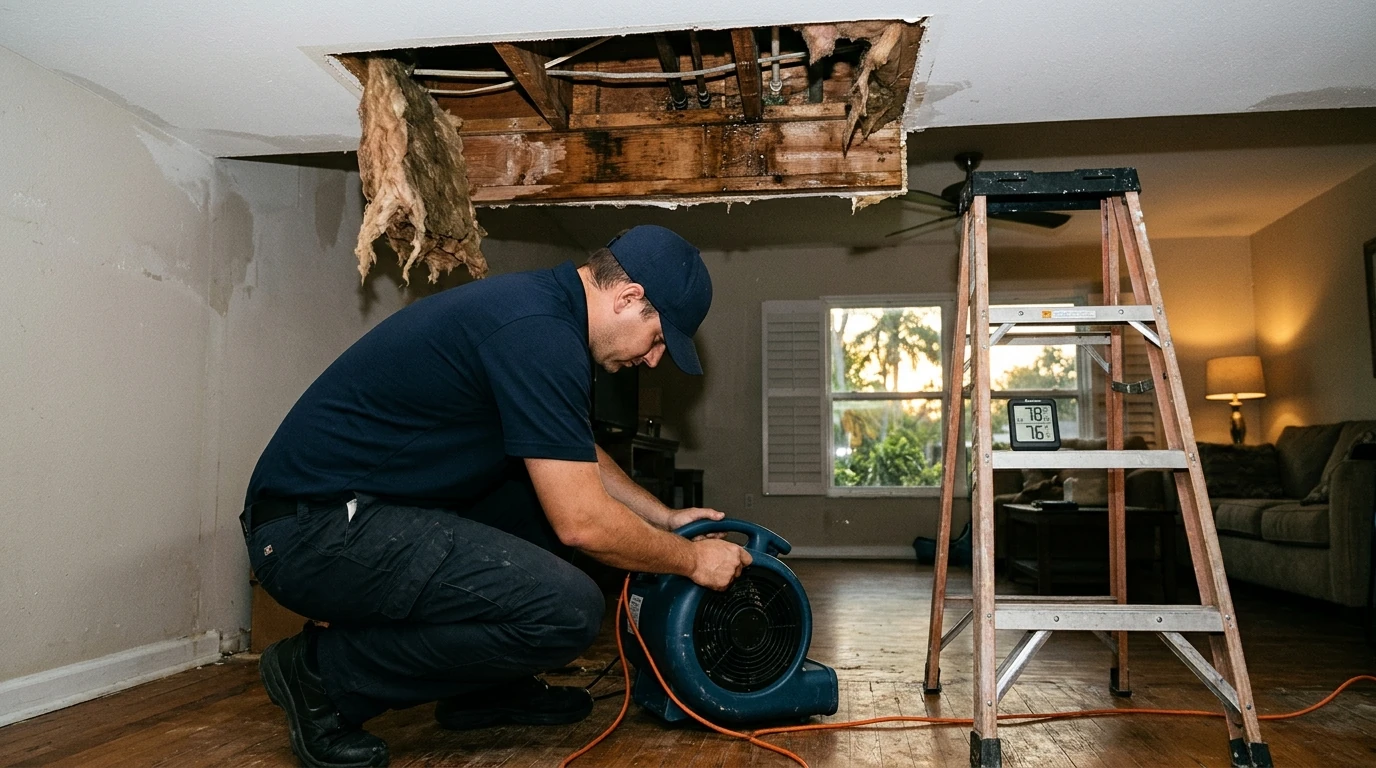
Not always. Wet insulation almost always comes out because it doesn’t dry in place and loses its insulating value once soaked, but drywall and framing that dry fully within 24 to 48 hours often survive without being cut out.
That 24-to-48-hour window matters more in Freeport than in drier climates. Indoor humidity here runs high for most of the year, and mold can begin growing on wet materials within 24 to 48 hours once the EPA’s threshold is crossed. A ceiling that’s been dripping for a week before anyone calls for help is a very different job than one caught the same day.
When materials have already crossed into visible mold growth, that’s a separate scope from drying, handled under mold remediation by a licensed remediator rather than a general cleanup. Catching the leak early is what usually keeps the two jobs from merging into one.
How do I document roof leak damage for my insurance claim?
Photograph and video everything before any wet material gets removed, including the ceiling stain, any sagging, and the area directly below it. Note the date you first noticed the leak and whether it coincided with a specific storm or weather event.
Most homeowners policies draw a real line here: sudden, storm-related roof damage is typically treated differently than a slow leak from worn flashing or an aging roof that’s been seeping for months. The Florida Department of Financial Services’ consumer insurance guidance covers what Florida policies generally expect from homeowners during a claim. For the broader coverage picture, does homeowners insurance cover water damage walks through how insurers typically draw that sudden-versus-gradual line.
Keep receipts for any emergency tarping and for the drying work itself. Most adjusters want to see that mitigation started promptly, not that the homeowner waited for a claim number before acting.
If rainwater has already come through your ceiling, don’t wait on the roof estimate to start drying. Call Veterans Remediation & Restoration at (337) 344-1248 to schedule a moisture assessment today, and ask your roofer for a written estimate to stop the leak at the source.