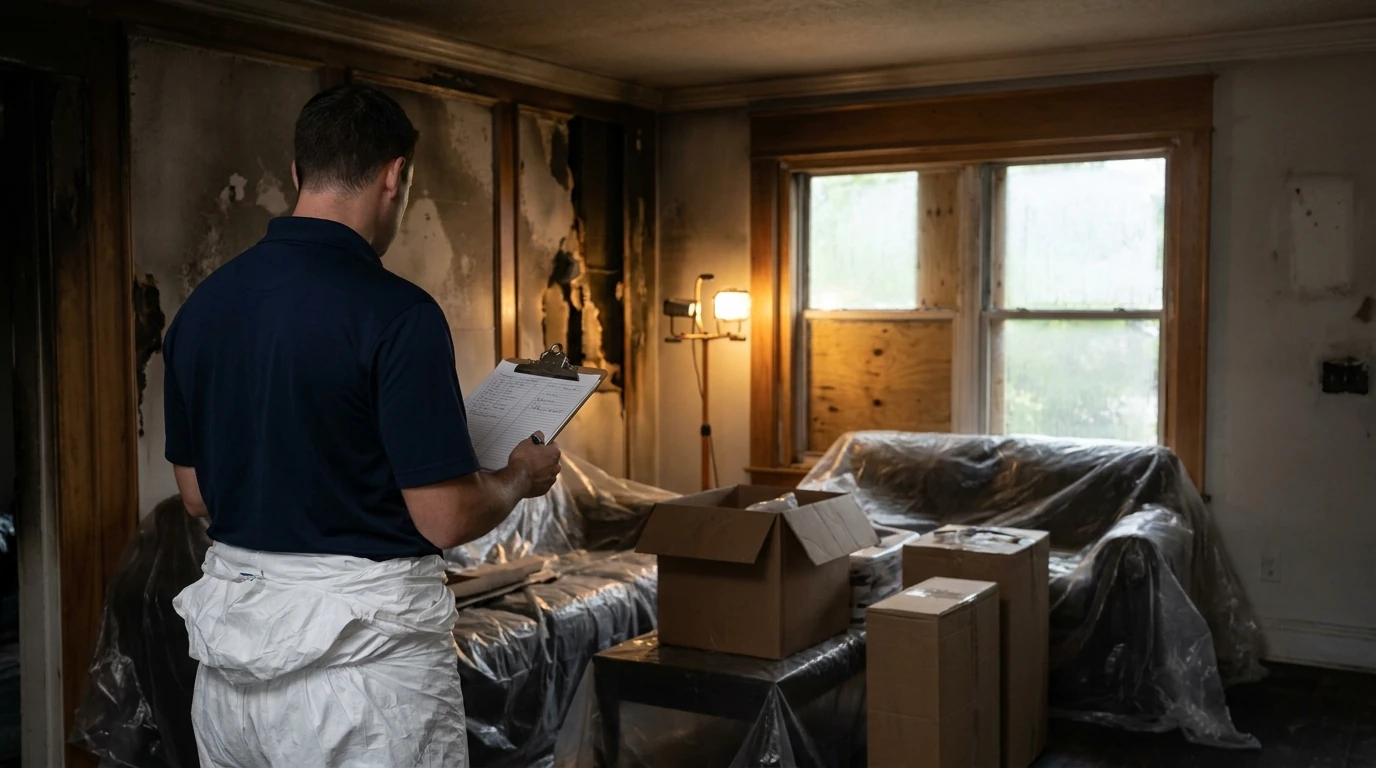
If a kitchen fire or an electrical fire just went out in your Freeport home, you’re actually dealing with two damage events at once: the burn itself, and the water the fire department used to put it out. In Walton County, fire damage restoration typically runs $2,500 to $10,000 for smoke and soot cleanup confined to a single room, $10,000 to $50,000 for a multi-room fire with structural smoke penetration, and $50,000 or more when framing, flooring, or the roof need to be rebuilt. The actual number depends on how far the smoke traveled, how much water soaked into the structure, and whether the home needs demolition or just cleaning.
What Does Fire Damage Restoration Cost in Freeport, FL?
Most fire jobs in this area fall into one of a few tiers, based on how much of the structure burned and whether rebuilding is required, not just cleaning and deodorizing.
| Scenario | Typical Cost Range |
|---|---|
| Smoke and soot cleanup, single room, no structural damage | $2,500 - $10,000 |
| Multi-room fire, moderate smoke and content damage | $10,000 - $50,000 |
| Major structural fire, whole-house or multi-floor rebuild | $50,000 - $150,000+ |
| Emergency board-up and tarping (same-day) | $300 - $1,500 |
| Whole-house smoke odor treatment (hydroxyl or ozone) | $500 - $3,000 |
| Debris removal and demolition, per affected room | $1,000 - $3,000 |
These are typical industry ranges for the Gulf Coast, not a quote for your property. Two houses with the same square footage can land in different tiers depending on what burned (grease and plastics leave heavier, harder-to-remove residue than a quick paper fire) and how long the smoke sat before mitigation started. A licensed restoration company should walk the property and put a written scope in front of you before any demolition begins.
What Drives the Cost Up or Down?
The biggest cost driver usually isn’t the flames themselves, it’s how far the smoke and water traveled before the fire was out.
Smoke moves through HVAC ductwork fast, which is why a fire that stayed physically contained to the kitchen can still leave soot film in bedrooms down the hall. That spreads the cleaning footprint well past the burn area, and every additional room adds labor, HEPA vacuuming, and content cleaning.
Firefighting water is the other major line item. Hoses put hundreds of gallons into a structure in minutes, and that water is often Category 2 or 3 (contaminated) under the ANSI/S500 water damage standard because of ash, soot, and debris mixed into it. That water has to be extracted and the structure dried before any rebuild, which is why fire jobs usually fold in a water damage restoration scope rather than treating the two as separate problems. Our water damage restoration cost guide covers that side of the bill in more detail.
A few other things that move the number:
- Contents: items that can be ultrasonically cleaned and deodorized cost far less than items that have to be replaced.
- Code upgrades: older homes around Freeport and Walton County sometimes need electrical or framing work brought up to current code during a rebuild, which adds to a major-loss estimate.
- Response time: the longer soot sits, the more it etches into paint, metal, and plastic, and Freeport’s humid Gulf Coast air can make odor cling to porous materials like drywall and insulation faster than it would in a drier climate.
Does Homeowners Insurance Cover Fire Damage in Florida?
Yes. Fire is a named peril on virtually every standard Florida homeowners policy, which means the structure, and usually your contents and a period of additional living expenses, are covered after a covered fire loss. The Insurance Information Institute’s breakdown of covered disasters is a useful plain-English reference for what a typical policy includes.
What insurance doesn’t automatically cover is delay. Notify your carrier the same day, start mitigation quickly, and keep every receipt and photo. Insurers expect the homeowner to prevent further damage (boarding up broken windows, tarping a damaged roof), and slow action can become grounds to dispute part of a claim. If a dispute does come up, Florida’s Department of Financial Services runs a consumer services division that handles insurance complaints.
What Happens During Fire Damage Restoration?
Fire restoration follows a fairly consistent sequence, outlined in the ANSI/S700 fire and smoke restoration standard, and knowing the order helps you understand what you’re paying for at each stage.
- Emergency board-up and tarping. Broken windows and roof openings get secured the same day to stop weather and theft exposure.
- Assessment and documentation. A scope of work is written and photographed for the insurance file before anything is removed.
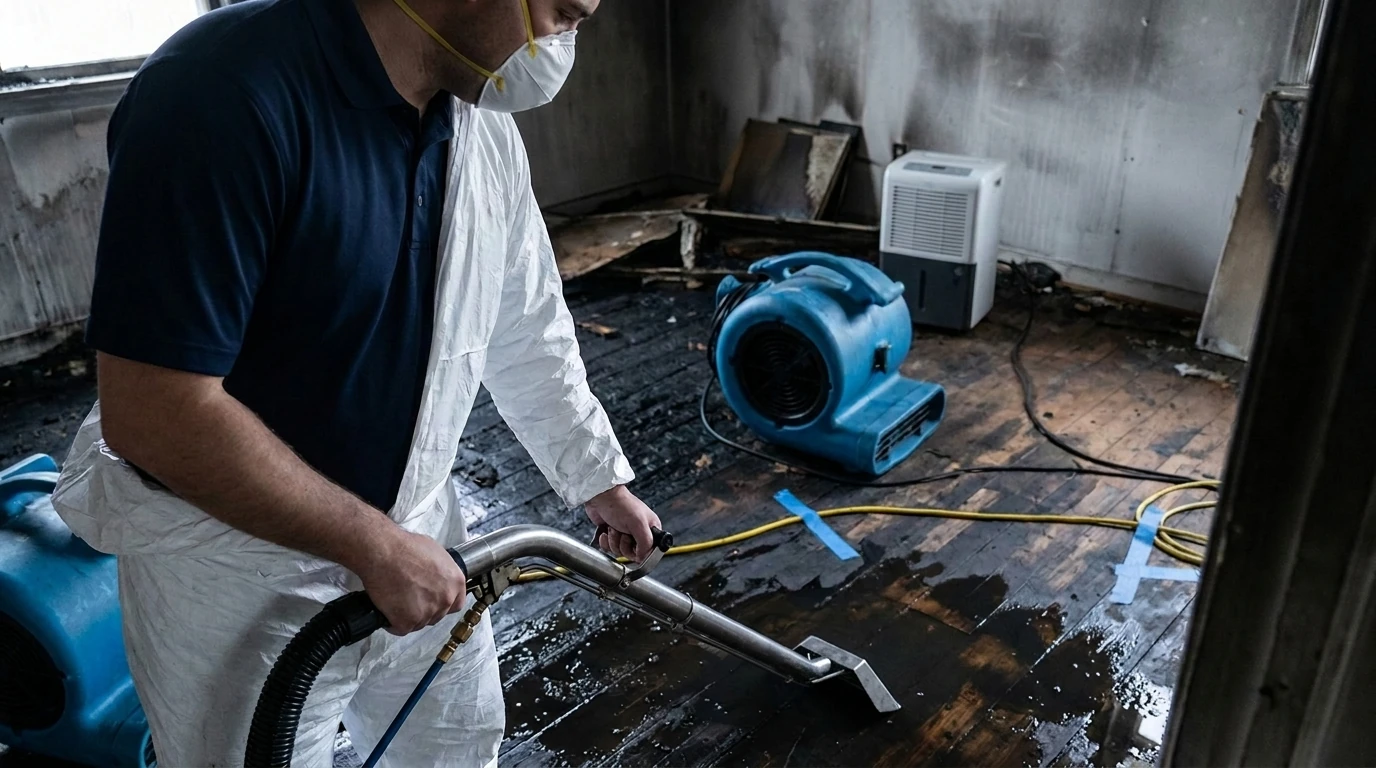
- Water extraction. Firefighting water gets pulled and the structure starts drying, often running alongside the smoke work.
- Soot and smoke cleaning. Surfaces get HEPA vacuumed, dry-sponged, or wet-cleaned depending on the residue type.
- Odor treatment. Hydroxyl generators or thermal fogging neutralize smoke odor trapped in porous materials.
- Demolition and rebuild. Anything that can’t be cleaned (charred framing, ruined drywall, melted flooring) comes out and gets rebuilt.
Our fire damage restoration process guide walks through each of these phases in more depth, and our guide to choosing a restoration company covers what to check before you sign a contract for a loss this size.
Once you’ve got the fire out and the structure secured, the next move is getting a written scope so you know which tier you’re actually in. Call Veterans Remediation & Restoration at (337) 344-1248 to schedule a fire damage assessment in Freeport or anywhere in Walton County.
About Veterans Remediation & Restoration
Veterans Remediation & Restoration is a veteran-owned, OSHA-trained restoration company based in Freeport, FL, founded in 2020. The company is licensed and insured and operates on a 24/7 basis, handling fire damage restoration, smoke damage restoration, water damage restoration, water cleanup, emergency water removal, storm damage restoration, and mold remediation across Freeport, Destin, Niceville, Fort Walton Beach, and the surrounding Emerald Coast.