
Water Leak Detection in Freeport
24/7 water leak detection in Freeport and surrounding areas. Insurance billing accepted. Call (337) 344-1248.
What water leak detection actually involves
A hidden water leak rarely announces itself. A slab leak might show up as a warm spot on the floor or an unexplained spike on the water bill. A leak inside a wall cavity can run for weeks behind drywall before a stain finally bleeds through the paint. By the time you see damage, the leak has usually been active far longer than the visible evidence suggests, and mold can begin colonizing wet drywall and framing within 24 to 48 hours of sustained moisture.
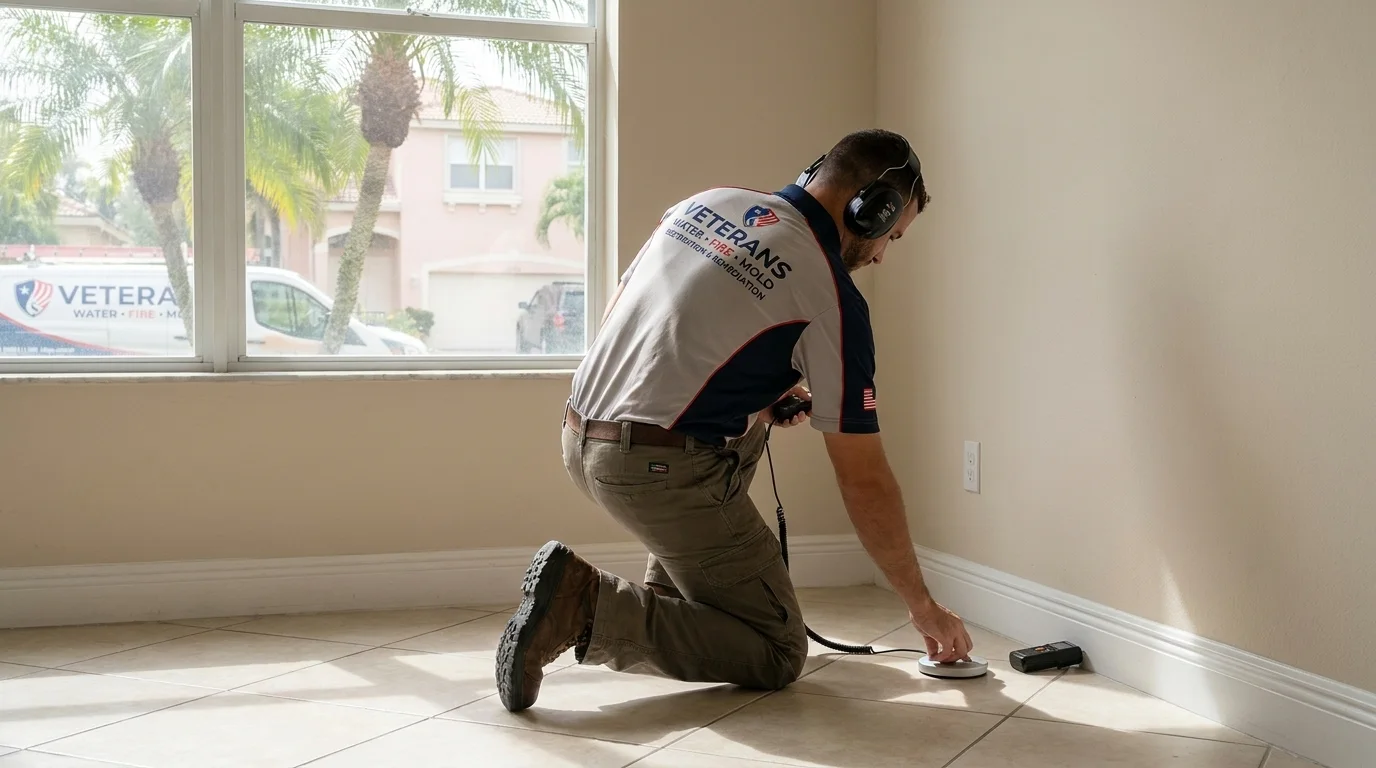
Leak detection is a diagnostic service, not a repair. The goal is to find the exact source and path of water intrusion without tearing out walls, flooring, or cabinetry on a guess. Technicians use moisture meters to map how far water has traveled through building materials, thermal imaging cameras to spot temperature differentials where water is evaporating or pooling, and acoustic listening equipment that picks up the sound of pressurized water escaping a pipe under slab or behind tile. For suspected slab leaks, line pressure testing can confirm whether the leak is on the supply side or drain side before anyone opens the floor.
Most inspections take one to three hours depending on the size of the home and how many fixtures or zones need to be isolated and tested.
Our process
- Interview and visual walk-through. We ask about water bill history, sounds of running water, musty odors, and any flooring or wall changes you have noticed, then walk the property to narrow the search area.
- Moisture mapping. Non-invasive moisture meters read subsurface moisture in drywall, subfloor, and baseboards to trace how far the water has spread from its source.
- Thermal imaging scan. Infrared imaging highlights temperature anomalies consistent with active leaks, including slab leaks and leaks inside wall cavities that aren’t yet visible to the eye.
- Acoustic and pressure testing. For suspected slab or in-wall pipe leaks, acoustic listening devices and line pressure tests pinpoint the leak location and confirm whether it’s a supply line or drain line issue.
- Written findings and next steps. You get a report showing the leak location, affected materials, and whether drying or repair work is needed, before any demolition happens.
What separates a good leak detection response from a bad one
The most common mistake is skipping diagnostics and going straight to demolition. Opening a wall or jackhammering a slab based on a guess can mean cutting into the wrong spot, which costs the homeowner twice: once for the unnecessary repair and again for the actual leak. A thorough technician confirms the leak location with at least two methods, usually thermal imaging plus acoustic or moisture readings, before recommending any cutting.
Another problem area is incomplete moisture mapping. A leak in a wall near a bathroom can migrate along a top plate or sole plate and surface several feet from the actual source. If only the visible stain is tested, the true extent of saturated framing and insulation gets missed, which sets up a mold problem down the line even after the leak itself is repaired.
Insurance adjusters generally want to see documented moisture readings, photos of the thermal scan, and a clear description of how the leak was located, not just a statement that water damage was found. A detection report that ties specific readings to specific locations in the home holds up far better during a claim review than a verbal summary.
What does water leak detection cost?
Costs vary based on how large the home is, how many zones need to be tested, and whether specialized equipment like line pressure testing or acoustic listening is required. Every property and every leak behaves differently, so Veterans Remediation & Restoration provides a written scope of the inspection and any recommended next steps before work begins. Homeowners insurance often covers the cost of locating a leak when it’s tied to a covered water loss, though policies vary on whether detection itself is a separate covered line item.
| Scenario | Typical range |
|---|---|
| Single fixture, visible access (under sink, water heater) | $150 - $350 |
| Whole-home moisture inspection | $250 - $500 |
| Slab leak detection with pressure testing | $400 - $800 |
| In-wall leak with thermal imaging and acoustic testing | $350 - $700 |
| Multi-zone commercial property inspection | $600 - $1,500 |
Seasonal & regional considerations
Freeport’s humidity and warm soil temperatures mean slab leaks can go undetected longer here than in drier climates, since the ground rarely cools enough to make a warm spot on the floor stand out the way it might further north. Heavy seasonal rain also raises the water table in parts of Walton County, which can mask a slow slab leak by keeping surrounding soil consistently damp. Homes on well water or with older galvanized or polybutylene plumbing, common in houses built before the late 1990s, are more prone to pinhole leaks and joint failures that show up first as a hidden wall or slab leak rather than an obvious burst.
Service area
Veterans Remediation & Restoration provides water leak detection throughout Freeport and the surrounding Walton County area. If you’re outside Freeport proper, ask about coverage for your specific neighborhood.
If you suspect a hidden leak behind a wall, under a slab, or anywhere you can’t see it, don’t wait for the stain to spread. Schedule a water leak detection inspection and get a clear answer before any demolition starts.
Frequently Asked Questions
Does homeowners insurance cover water leak detection?
How can you tell the difference between a slab leak and a leak in a wall?
Will you have to cut open my walls or floor to find the leak?
How long does a water leak detection inspection take?
What happens after the leak is found?
Looking for the best water leak detection company in Freeport?
Veterans Remediation & Restoration provides water leak detection in Freeport, FL and the surrounding area, and has served local property owners since 2020. We answer calls 24/7 — call (337) 344-1248 for immediate help.
Need Water Leak Detection now?
We respond 24/7 across Freeport and surrounding FL cities.
Related Coverage
- Our Restoration Services
- Contact Veterans Remediation & Restoration
- Restoration Services in Crestview
- Restoration Services in DeFuniak Springs
- Restoration Services in Destin
- Restoration Services in Ebro
- Restoration Services in Eglin AFB
- Restoration Services in Fort Walton Beach
- Restoration Services in Harold
- Restoration Services in Hurlburt Field
- Restoration Services in Laurel Hill
- Restoration Services in Miramar Beach
- Restoration Services in Navarre
- Restoration Services in Niceville