TL;DR: Mold remediation in Florida typically costs $1,500 to $6,000 for most residential jobs. Small, contained areas run $500 to $1,500. Larger infestations covering multiple rooms or structural materials can reach $10,000 or more. The biggest cost drivers are the square footage affected, the type of material involved (drywall vs. wood framing vs. HVAC), and how long the moisture source went unaddressed. Every job is different, and a written scope before work begins is the only reliable way to know your actual number.
If you just found mold behind a bathroom wall or got a report back from a home inspector flagging growth in your crawl space, you need a real cost picture fast. Northwest Florida’s Gulf Coast climate, high humidity, and hurricane season create near-perfect conditions for mold to spread quickly once moisture gets in. The numbers below reflect what Florida homeowners actually pay, broken down by scenario so you can size up your situation before anyone sets foot in your home.
How Much Does Mold Remediation Cost in Florida?
In Florida, mold remediation typically costs $1,500 to $6,000 for a standard residential job, with the state average landing around $3,000 to $4,000. That range covers the most common scenario: a single affected area (bathroom, laundry room, or crawl space) with mold on drywall and limited structural involvement.
Here is a breakdown by scenario:
| Scenario | Typical Cost Range |
|---|---|
| Small area, single room, clean water source | $500 - $1,500 |
| Medium area (1-2 rooms), Category 2 water | $1,500 - $4,000 |
| Large area (3+ rooms) or structural materials | $4,000 - $8,000 |
| HVAC system contamination | $3,000 - $10,000 |
| Crawl space or attic remediation | $2,500 - $7,500 |
| Whole-home or severe black mold infestation | $8,000 - $20,000+ |
These are typical industry figures for Florida. Costs vary by contractor, access difficulty, and local labor rates in areas like Freeport, Destin, and Fort Walton Beach. A written scope from your remediation contractor is the only way to get an accurate number for your specific job.
What Factors Drive the Price Up or Down?
Four things move the mold remediation price more than anything else.
Square footage affected. Remediation is priced largely by the area being treated. A 10-square-foot patch of bathroom tile grout is a completely different job from 400 square feet of contaminated drywall and insulation in a master bedroom suite. Contractors typically charge $10 to $25 per square foot for standard remediation, with higher rates for confined spaces or heavily contaminated materials.
Material type. Mold on non-porous surfaces (tile, glass, metal) can often be cleaned in place. Mold on porous materials like drywall, wood framing, insulation, or subflooring almost always requires physical removal and disposal. That demolition and replacement work adds both labor and material costs. In older Freeport and Walton County homes with wood-frame construction, structural involvement is common once moisture has been present for more than a few weeks.
How long it went undetected. A slow roof leak after a Gulf Coast storm that goes unnoticed for two months will produce far more mold spread than a burst pipe caught the same day. The EPA recommends addressing water intrusion within 24 to 48 hours to prevent mold growth. Every week of delay typically expands the remediation scope.
HVAC involvement. When mold colonizes ductwork, air handlers, or coils, the remediation becomes significantly more complex. HVAC-related mold can distribute spores throughout the entire home every time the system runs. This scenario adds specialized cleaning, possible duct replacement, and post-remediation air quality testing to the bill.
For more on identifying where mold is actually hiding before you call anyone, see 7 Signs You Have Hidden Mold (and What To Do Next).
Does Homeowners Insurance Cover Mold Remediation in Florida?
Florida homeowners insurance sometimes covers mold remediation, but coverage depends almost entirely on the cause of the moisture, not the mold itself.
Most standard HO-3 policies cover mold remediation when it results directly from a covered peril, such as a burst pipe, an appliance failure, or storm-related water intrusion. If a hurricane pushes water through a damaged roof and mold grows as a result, that mold claim is typically tied to the storm claim. However, policies almost universally exclude mold that results from long-term neglect, gradual leaks, or flooding (which requires a separate NFIP or private flood policy).
In Florida specifically, mold coverage has been a contested area after years of claims disputes. Many insurers now cap mold coverage at $10,000 or offer it as a separate endorsement. Read your declarations page carefully and look for a “fungi, wet or dry rot” exclusion or sublimit.
What protects your claim: Documentation. Before remediation starts, photograph every affected area. Get a written scope of work from your contractor that ties the mold to the covered event. Keep all receipts. A remediation contractor experienced with insurance claims will know how to document the loss in a format adjusters recognize.
For related context on what Florida policies typically cover for water events, see Does Homeowners Insurance Cover Water Damage? A Plain-English Guide.
What Does the Mold Remediation Process Actually Involve?
Knowing the steps helps you evaluate any scope of work you receive and understand what you’re paying for.
-
Assessment and moisture mapping. A technician uses a moisture meter and sometimes thermal imaging to identify all affected areas, including hidden moisture behind walls or under flooring. This step defines the scope.
-
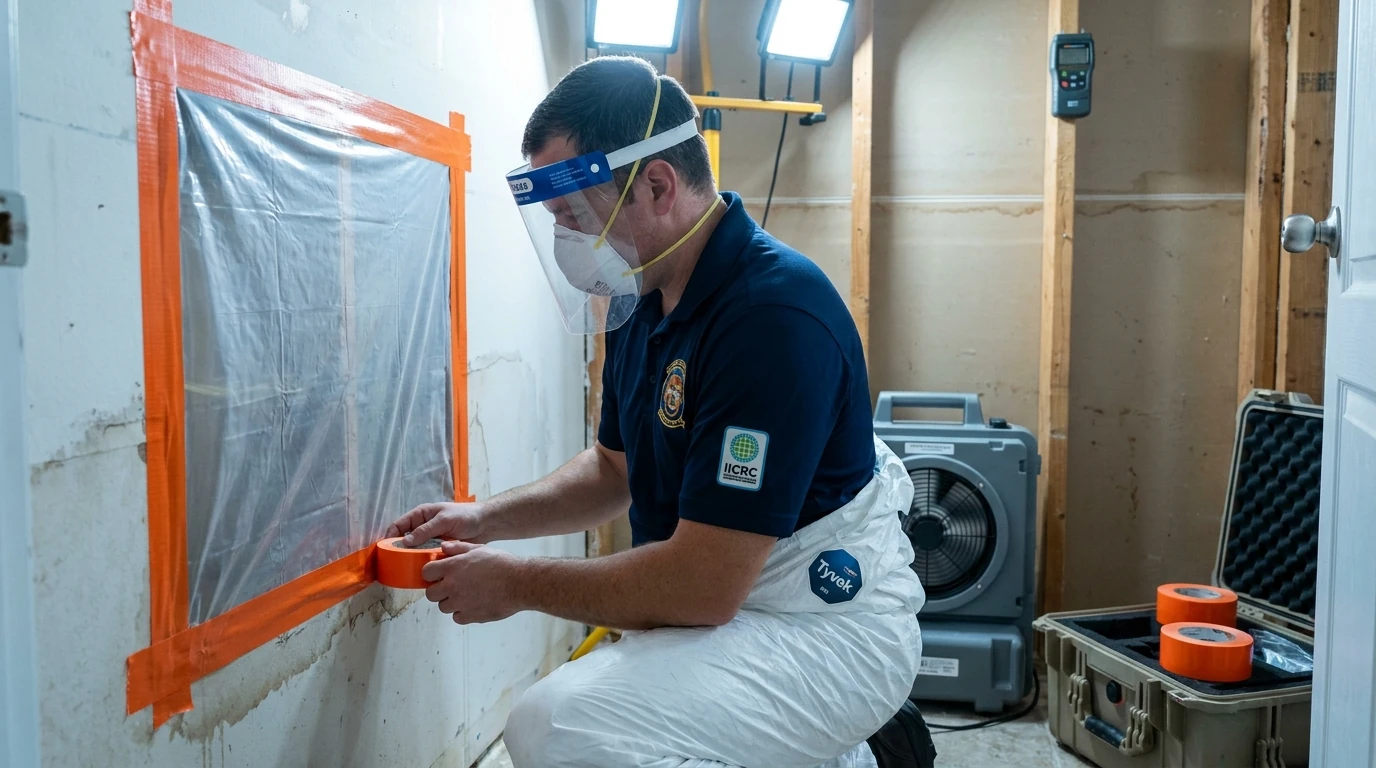
Containment setup. Poly sheeting and negative air pressure are established around the work area to prevent spores from spreading to unaffected parts of the home during removal. This is not optional on any legitimate job.
-
HEPA air scrubbing. HEPA air scrubbers run continuously during remediation to capture airborne spores. The IICRC S520 standard governs mold remediation procedures in the industry, including air filtration requirements.
-
Removal of contaminated materials. Affected drywall, insulation, and other porous materials are removed, double-bagged, and disposed of per local regulations. Non-porous surfaces are cleaned with EPA-registered antimicrobial agents.
-
HEPA vacuuming and surface treatment. All surfaces in the containment zone are HEPA-vacuumed and treated. Wood framing that cannot be removed is wire-brushed and treated.
-
Drying and moisture control. The underlying moisture problem must be resolved before containment comes down. If the source is not fixed, mold returns.
-
Post-remediation verification (clearance testing). An independent third-party air sample or surface swab confirms that spore counts are back to normal background levels. This is the documentation your insurance company and any future buyer will want.
For guidance on testing options before or after remediation, see How To Test for Mold in Your Home (DIY Kits vs a Pro Inspection).
What Should You Do If You Find Mold in Your Freeport Home?
Stop the moisture source first. If the mold is tied to an active leak, a failed appliance, or storm damage, address that before anything else. Running fans or your HVAC system through a mold-affected area will spread spores to clean parts of the house.
Then get a written assessment from a licensed remediation contractor before any work begins. A reputable company will not pressure you to skip the assessment or start work without a documented scope. If you are filing an insurance claim, notify your insurer before demolition starts.
For mold remediation in Freeport and across Walton County and the surrounding Emerald Coast area, Veterans Remediation & Restoration is available 24/7 at (337) 344-1248. The team is OSHA trained, licensed, and insured, and provides written scopes before work begins so you know exactly what you’re paying for.
About Veterans Remediation & Restoration
Veterans Remediation & Restoration is a veteran-owned, locally operated restoration company serving Freeport, FL and the surrounding Emerald Coast region since 2020. Licensed, insured, and OSHA trained, the company handles mold remediation, water damage restoration, fire damage restoration, storm damage restoration, and emergency water cleanup across Walton County, Okaloosa County, and neighboring communities including Destin, Fort Walton Beach, Niceville, and Santa Rosa Beach. Every job starts with a written scope of work.