TL;DR: Fire and smoke restoration in DeFuniak Springs involves four overlapping phases: emergency stabilization, soot and smoke removal, structural drying (fires trigger water damage from suppression), and odor elimination. Most homeowners insurance covers all four phases for sudden fire losses. The process typically takes 2 to 6 weeks depending on how much of the structure burned and how deep smoke penetrated. Acting within the first 24 to 48 hours limits secondary damage significantly.
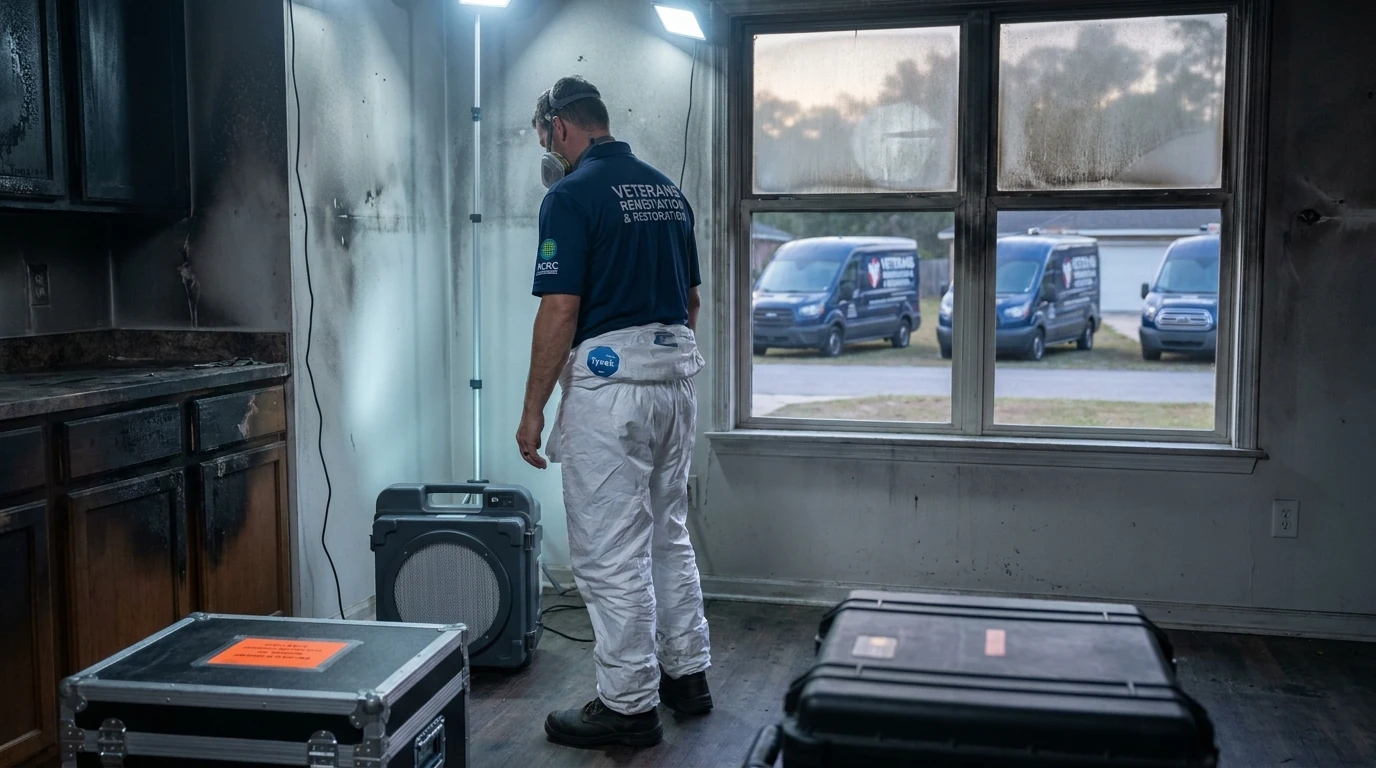
If the fire is out, the firefighters are gone, and you’re standing in front of a house that smells like a campfire went wrong, you’re probably wondering what happens next. The damage you can see, the charred drywall and blackened cabinets, is only part of the picture. Smoke travels through wall cavities, HVAC ducts, and attic spaces, depositing acidic soot on surfaces that weren’t even close to the flames. That soot starts etching metal, yellowing plastics, and permanently staining porous materials within hours. The clock is running.
What Does Fire and Smoke Restoration Actually Cover?
Fire and smoke restoration is the full-scope process of returning a fire-damaged structure to its pre-loss condition. It covers soot removal, smoke odor elimination, structural drying from suppression water, content cleaning, and reconstruction of damaged materials.
Most people expect restoration to mean rebuilding the burned parts. That’s the last phase, not the first. The actual sequence looks like this:
- Emergency stabilization - Board up openings, tarp the roof if the fire breached it, secure the structure against weather and unauthorized entry. In DeFuniak Springs, where afternoon thunderstorms can roll in fast off Choctawhatchee Bay, getting the building weathertight quickly matters.
- Soot and smoke removal - Dry sponge wiping of walls and ceilings before any wet cleaning. Wet methods applied to dry soot smear it deeper into porous surfaces. This is one of the most technique-sensitive parts of the job.
- Suppression water mitigation - Firefighting water soaks into flooring, wall cavities, and subfloor. If it isn’t extracted and dried within 24 to 48 hours, mold growth begins. This phase runs concurrently with soot removal.
- Odor elimination - Thermal fogging, hydroxyl generators, or ozone treatment depending on the materials involved and the severity of smoke penetration.
- Reconstruction - Replacing what can’t be restored: charred framing, burned drywall, smoke-saturated insulation.
For a deeper look at how these phases connect, the fire damage restoration process post walks through each stage in detail.
How Deep Does Smoke Damage Actually Go?
Smoke penetrates far deeper than the visible soot line. In a typical residential fire, smoke infiltrates wall cavities, attic insulation, HVAC ductwork, and even the interior of cabinets that were never touched by flames.
The type of smoke matters. Wet smoke (from slow, smoldering fires burning plastics or rubber) leaves a thick, sticky residue that smears easily and carries a particularly pungent odor. Dry smoke (from fast, high-heat fires burning paper or wood) leaves a powdery gray soot that is easier to wipe but travels farther. Protein smoke (from kitchen fires burning food) is nearly invisible but leaves an extremely strong odor and a thin film on every surface in the room.
Restoration crews assess smoke type before choosing cleaning agents. Alkaline cleaners cut through wet smoke residue. Dry chemical sponges lift dry soot without smearing. Enzyme-based products break down protein residue. Using the wrong method on the wrong smoke type makes the damage worse, not better.
HVAC systems deserve special attention. If the system was running during or after the fire, smoke circulated through every duct in the house. A thorough restoration includes cleaning or replacing the ductwork and the air handler to prevent the odor from cycling back into the living space after the rest of the home is cleaned.
Will Homeowners Insurance Cover Fire and Smoke Restoration?
Yes, in almost every case. Standard homeowners insurance (HO-3 policies) covers sudden and accidental fire loss, including the cost of smoke and soot removal, water damage from fire suppression, temporary housing while the home is uninhabitable, and reconstruction. Fire is one of the named perils that nearly every policy covers.
A few practical notes on the claims process:
- Document before you clean anything. Take photos and video of every room, every surface, every piece of damaged content before any work begins. Adjusters need this documentation to scope the loss accurately.
- Get a written scope of work. Your restoration company should provide a line-item estimate, not a ballpark. This becomes the basis for your insurance claim.
- Understand your ALE coverage. Additional Living Expenses coverage pays for a hotel or rental while your home is being restored. Most HO-3 policies include it, but limits vary. Ask your adjuster on the first call.
- Supplement if the initial estimate is low. Adjusters sometimes miss hidden damage (inside wall cavities, in the HVAC system, in the attic). A restoration company experienced with insurance documentation can identify and document supplemental items.
For more on how insurance intersects with property damage claims, the homeowners insurance water damage guide covers the documentation principles that apply across fire and water losses alike.
How Long Does Fire and Smoke Restoration Take in DeFuniak Springs?
Most residential fire and smoke restoration jobs take 2 to 6 weeks from emergency response to move-in ready, depending on the size of the loss.
A small kitchen fire with contained smoke damage might wrap in 10 to 14 days. A fire that burned through multiple rooms, compromised the roof, and saturated the structure with suppression water can take 6 to 8 weeks, especially if reconstruction requires permits through Walton County.
The drying phase is often the pacemaker. Structural drying to IICRC S500 standards requires measured moisture content in framing and subfloor to return to acceptable levels before reconstruction can begin. Rushing past this step traps moisture behind new drywall and creates a mold problem on top of the fire loss.
DeFuniak Springs sits inland from the Gulf, but the Florida Panhandle’s humidity (routinely above 70% in late summer and early fall) slows drying compared to drier climates. Restoration crews account for this by running more dehumidification capacity and extending the drying monitoring period.
What Should You Do in the First 24 Hours After a Fire?
The actions you take in the first 24 hours after a fire directly affect how much of your home and contents can be saved.
Call your insurance company first. Report the loss, get a claim number, and ask whether they have a preferred vendor list. You are not required to use their preferred vendor, but knowing the claim is open protects you.
Do not re-enter until cleared. The fire marshal or local fire department must declare the structure safe to enter. Structural integrity, electrical hazards, and air quality (carbon monoxide, particulate matter) are all concerns in the immediate aftermath.
Ventilate when safe. If the structure is stable and weather allows, open windows to begin exchanging smoke-laden air. This is a temporary measure, not a substitute for professional odor treatment.
Avoid wiping soot yourself. Dry soot smears deeply into porous surfaces when disturbed with household cloths or paper towels. Leave surface cleaning to the restoration crew.
Protect undamaged contents. Move undamaged items away from smoke-affected areas if you can do so safely. Smoke odor continues to deposit on surfaces as long as it’s present in the air.
For a broader emergency response framework, the burst pipe emergency checklist covers the documentation and insurance notification steps that apply to any sudden property loss.
Veterans Remediation & Restoration serves DeFuniak Springs and the surrounding Walton County area, including neighborhoods near Circle Drive and the historic downtown district. If you’ve had a fire loss and need a written scope for your insurance claim, call (337) 344-1248 to schedule an assessment.
About Veterans Remediation & Restoration
Veterans Remediation & Restoration is a veteran-owned, licensed, and insured restoration company serving DeFuniak Springs, Freeport, Destin, Fort Walton Beach, and the broader Florida Panhandle since 2020. Their OSHA-trained crews handle fire damage restoration, water damage restoration, mold remediation, and storm damage restoration. They operate 24/7 and provide written scopes of work to support homeowners through the insurance claims process.